Run tests
Run tests directly in a file or folder
If your tests do not require any specific actions before start, and you do not want to configure additional options, such as code coverage, you can run them by using the following options:
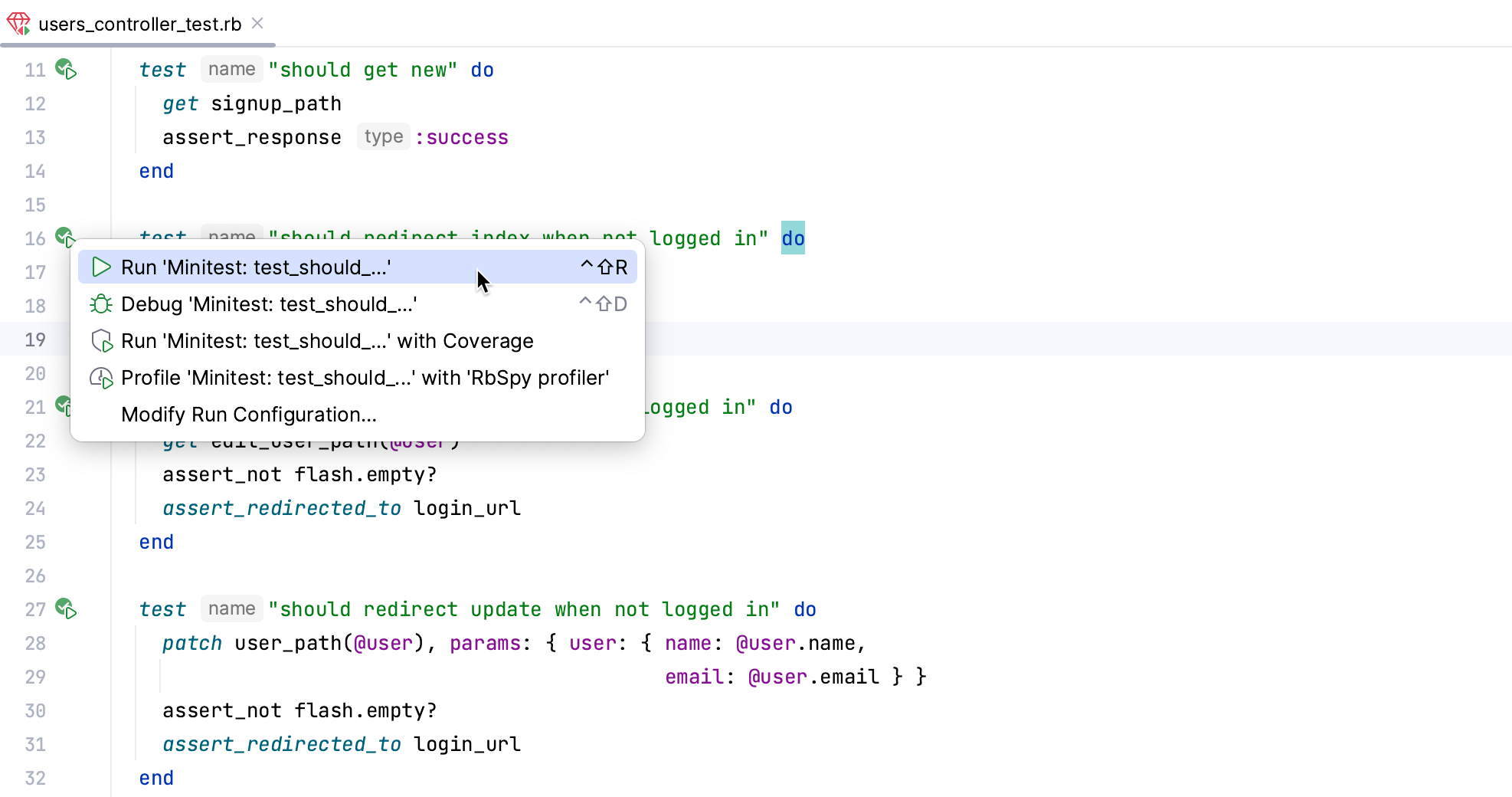
Place the caret at the test class to run all tests in that class, or at the test method, and press Ctrl+Shift+F10. Alternatively, click the
 gutter icon next to the test class or test method and select Run '<test name>' from the list.
The gutter icon changes depending on the state of your test:
The
 gutter icon marks a set of tests.
The
gutter icon marks new tests.The
 gutter icon marks successful tests.
The
 gutter icon marks failed tests.
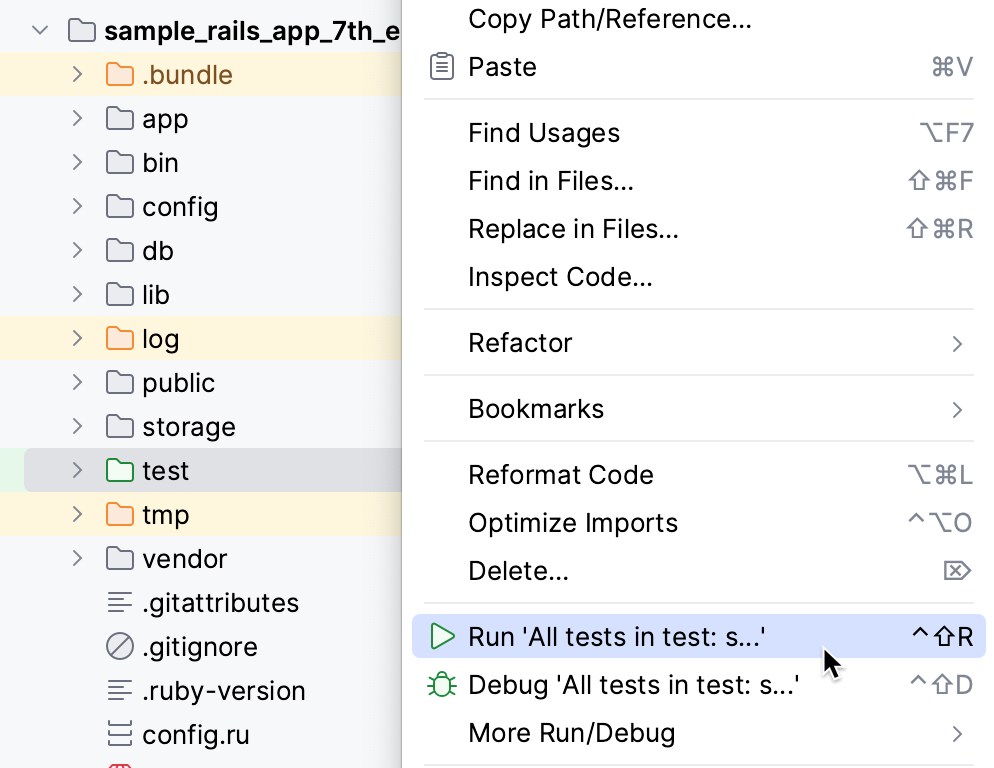
You can run all tests in one or several files or a folder at once. Select the required folder or test files and press Ctrl+Shift+F10. Alternatively, call the context menu and select or depending on the testing framework in use.
Run tests using the Run widget
When you run a test, RubyMine creates a temporary run configuration. You can save temporary run configurations, change their settings (for example, pass task arguments, specify environment variables, and so on) , share them with other members of your team.
Create a new run configuration or save a temporary one.
Use the Run widget on the main toolbar to select the configuration you want to run.
Click
or press Shift+F10.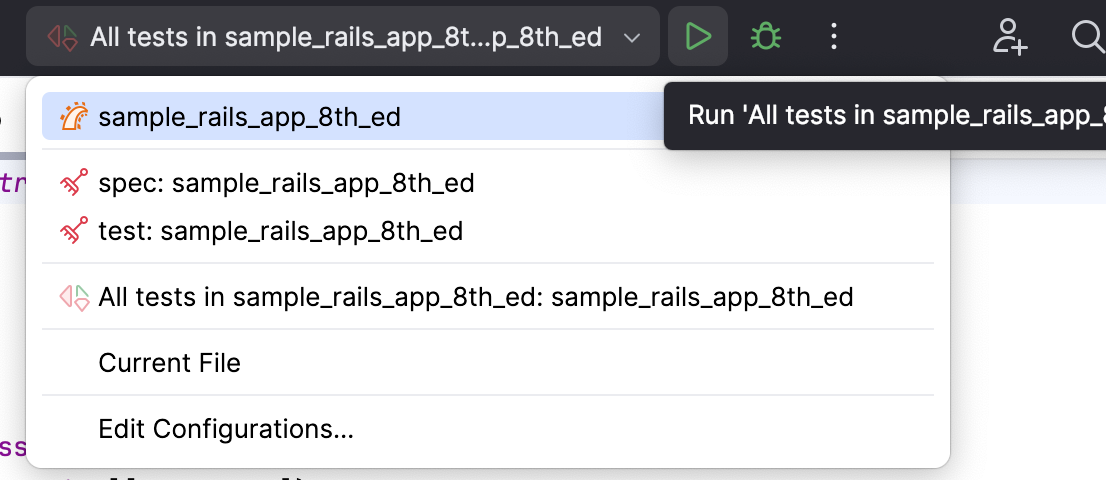
Run tests from Structure
In the Structure tool window, right-click a test and select
 Run 'method name' (Ctrl+Shift+F10).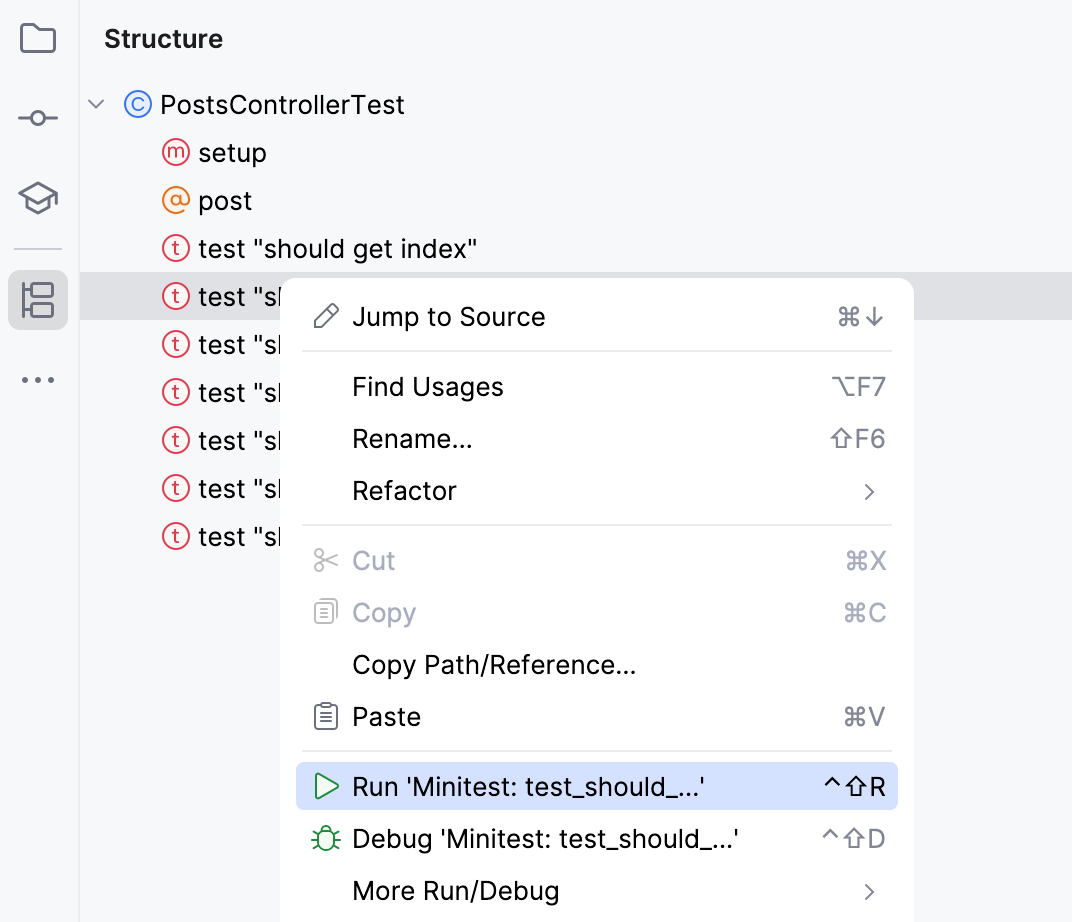
RubyMine creates a temporary run configuration with this test. To re-use theis configuration, save it and edit, if necessary.
After RubyMine finishes running your tests, it shows the results in the Run tool window on the tab for that run configuration. For more information about analyzing test results, refer to Explore test results.
Run tests using Rake tasks
To run tests using a Rake task, do the following:
Go to Ctrl+Alt+R.
In the invoked popup, start typing the name of a Rake task that runs tests, for example,
rake testorrake spec:controllers.Select the desired Rake task from the list and press Enter.
Run tests after commit
When you want to check that your changes would not break the code before pushing them, you can do that by running tests as commit checks.
Set up test configuration
Press Alt+0 to open the Commit tool window and click Show Commit Options
 .
.Under the Advanced Commit Checks menu, next to the Run Configuration option, click Choose configuration and select which configuration you want to run.
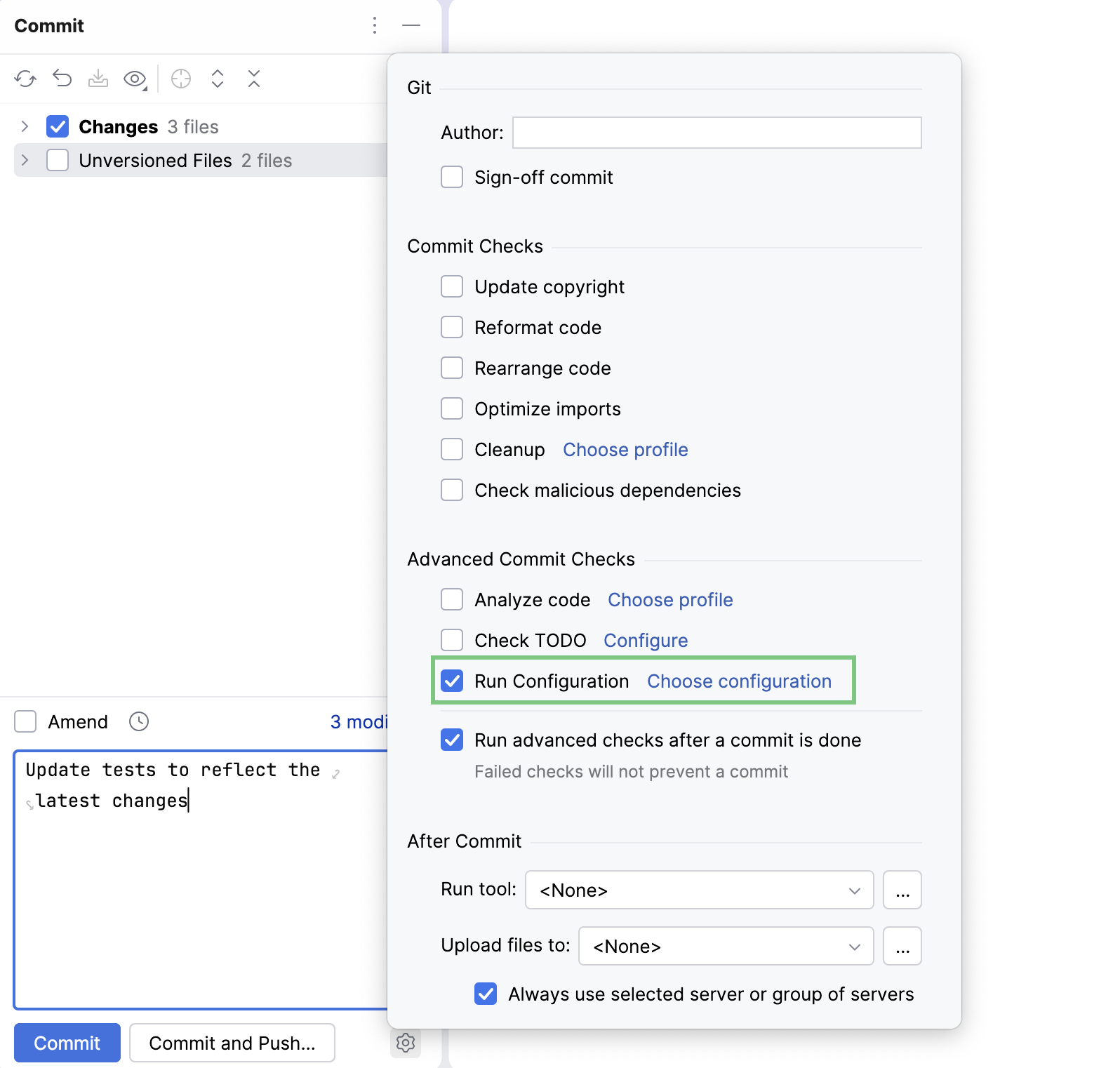
After you have set up the test configuration, the specified tests will run every time you make a commit.
Stop tests
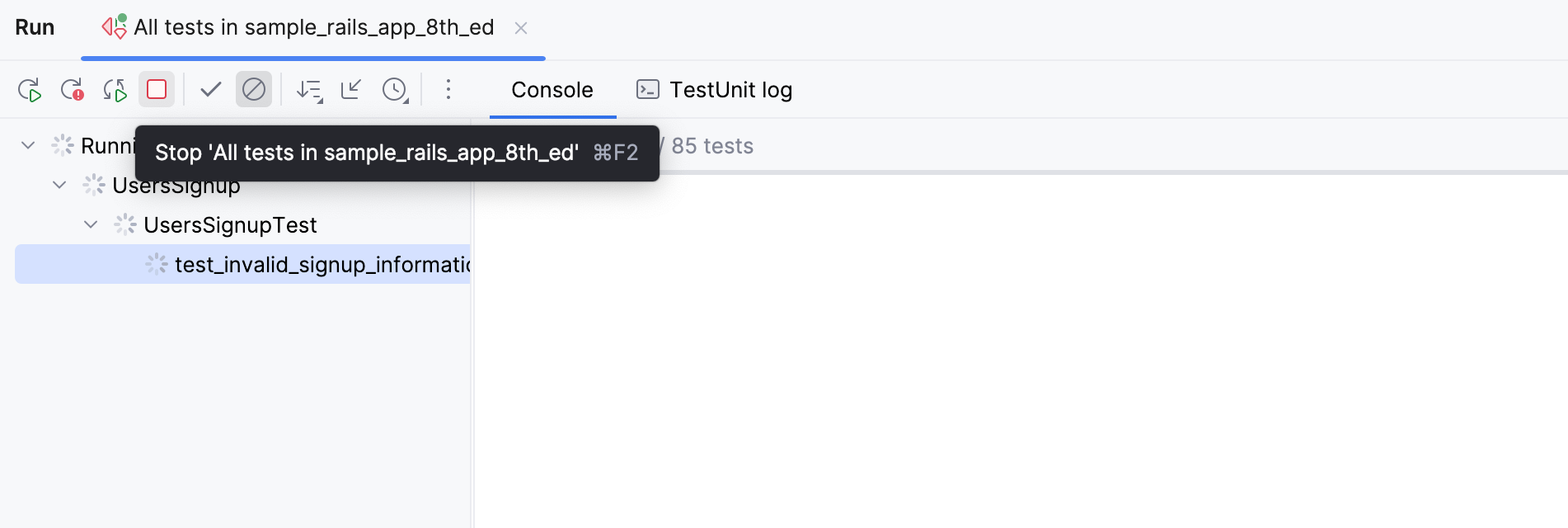
Use the following options on the Run toolbar of the tab for the run configuration:
Click
 or press Ctrl+F2 to terminate the process immediately.
Rerun tests
Rerun a single test
Right-click a test on the tab for the run configuration in the Run tool window and select Run 'test name'.
Rerun all tests in a session
Click
 on the Run toolbar or press Ctrl+F5 to rerun all tests in a session.
Rerun failed tests
Click
 on the Run toolbar to rerun only failed tests.
Hold Shift and click
to choose whether you want to Run the failed tests again or Debug them.
Rerun tests automatically
In RubyMine, you can enable the autotest-like runner: any test in the current run configuration restarts automatically after you change the related source code.
Click
 Rerun Automatically on the test results toolbar to enable the autotest-like runner.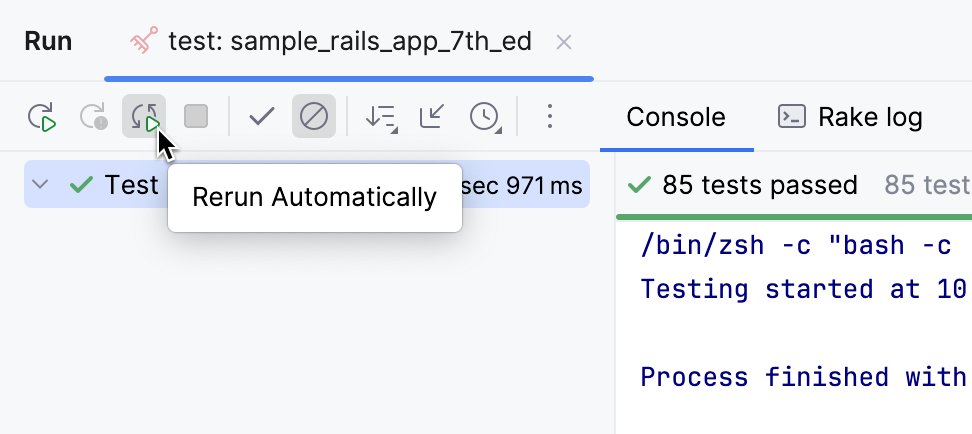
Debug failed tests
If you do not know why a test fails, you can debug it.
In the editor, click the gutter on the line where you want to set a breakpoint.
There are different types of breakpoints that you can use depending on where you want to suspend the program. For more information, refer to Breakpoints.
Right-click the
gutter icon next to the failed test and select Debug 'test name'.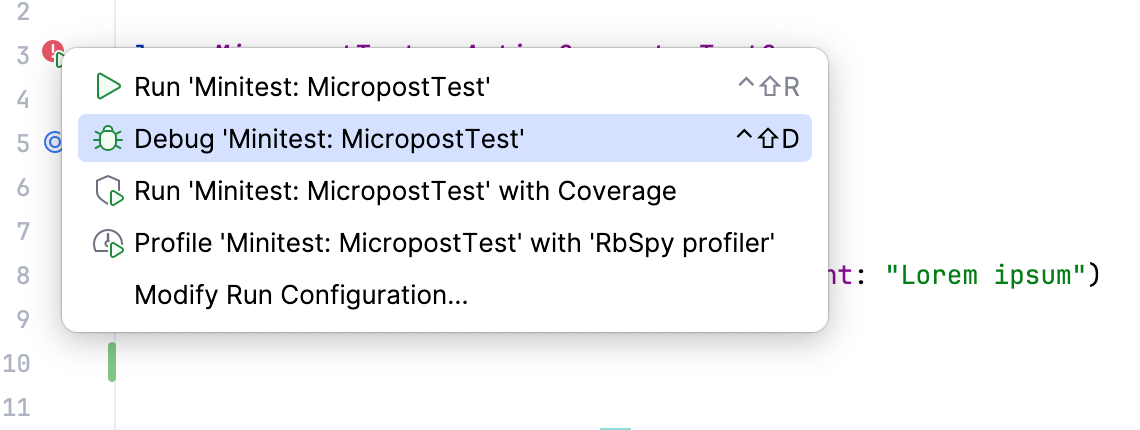
The test will rerun in debug mode. After that, the test will be suspended, allowing you to examine its current state.
You can step through the test to analyze its execution in detail.