Run a database in a Docker container
Install the Docker plugin
This functionality relies on the Docker plugin, which you need to install and enable.
Press Ctrl+Alt+S to open settings and then select .
Open the Marketplace tab, find the Docker plugin, and click Install (restart the IDE if prompted).
You can use Docker to run a database in a container.
In this tutorial, you will learn how to run a Docker container with a PostgreSQL server and connect to it using DataGrip.
Step 1. Pull a PostgreSQL server image
In the Services tool window, expand your Docker connection and select the Images node.
In the Image to pull field, start typing
postgresand select the necessary image repository. For example, selectpostgresto pull the defaultpostgres:latestimage.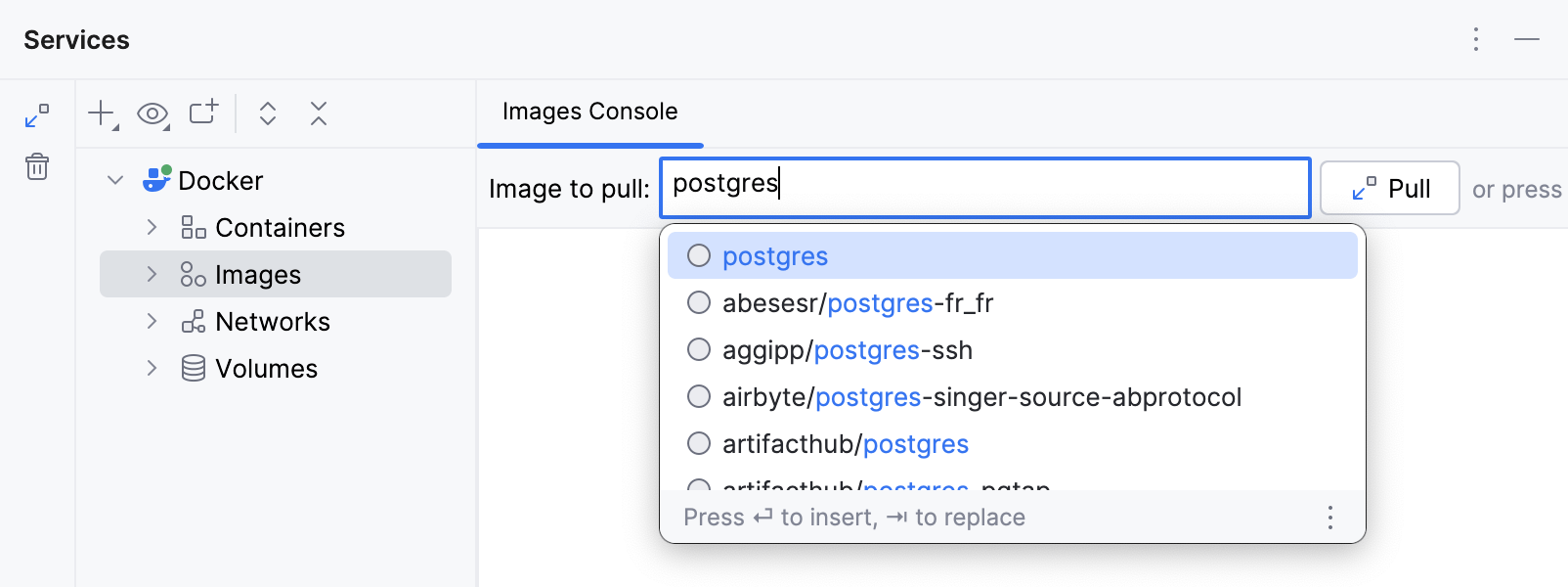
Press Ctrl+Enter and wait until Docker pulls the image.
Step 2. Run a container from the PostgreSQL server image
Expand the Images node, select the PostgreSQL server image, and click
 Create Container.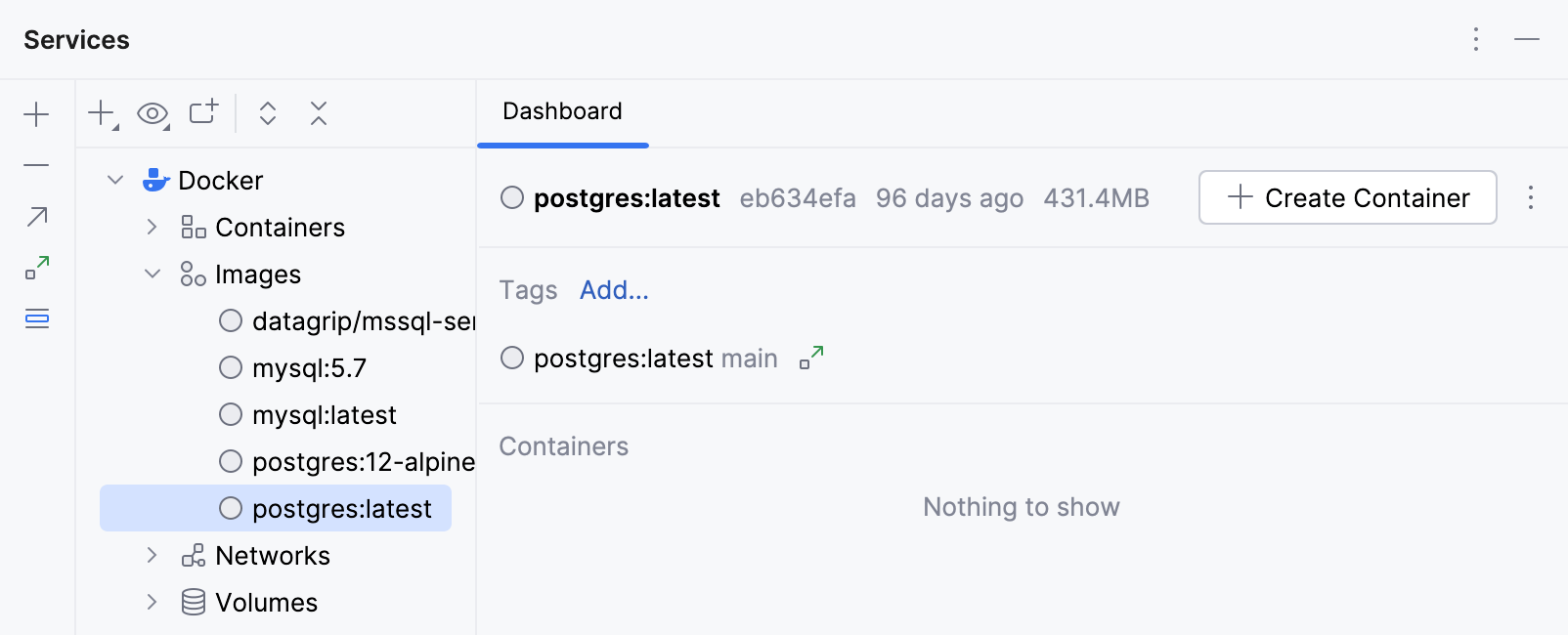
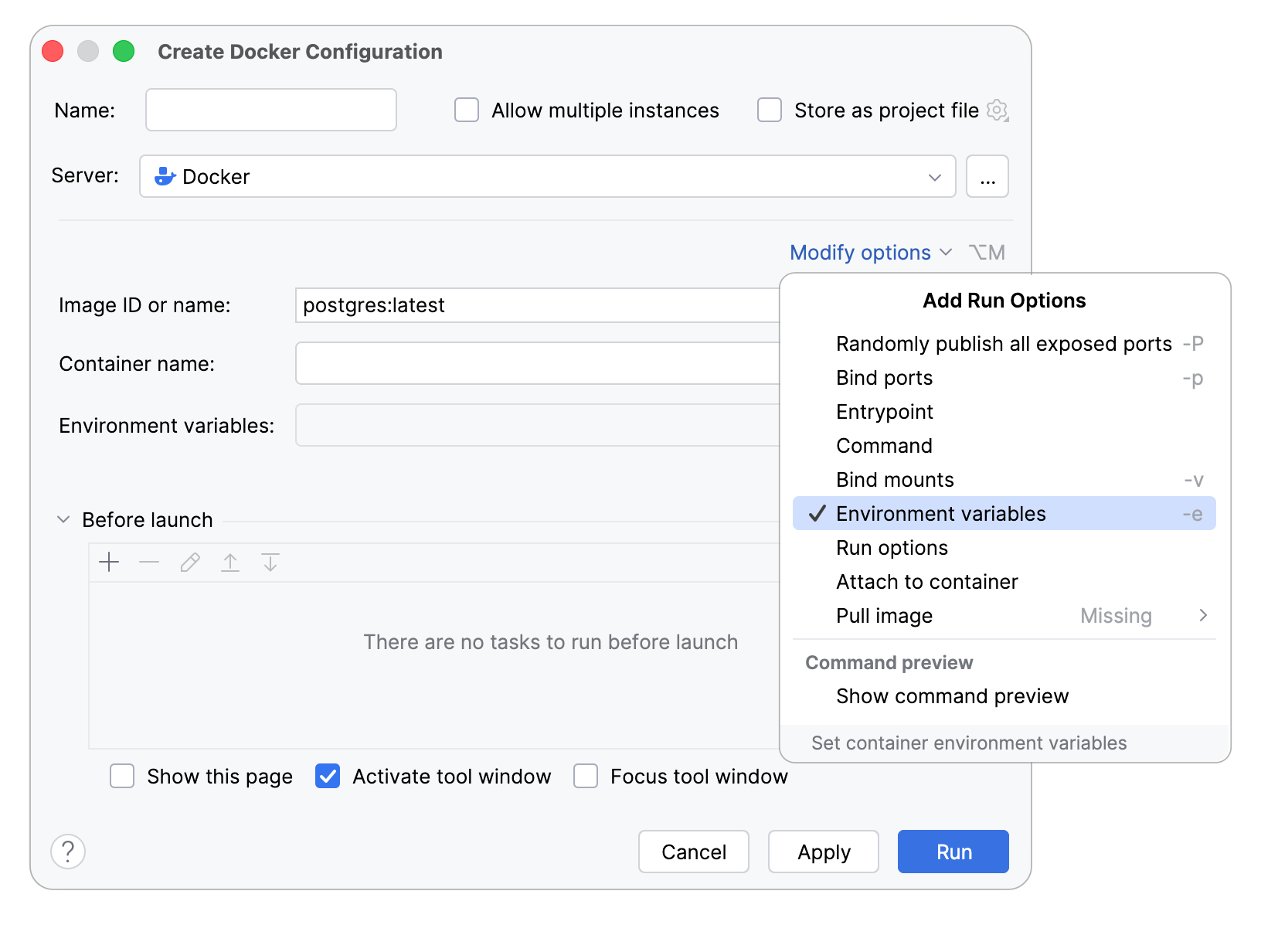
In the Create Docker Configuration dialog, click Modify options and select Randomly publish all exposed ports to publish all exposed container ports to the host interfaces.
Click Modify options and select Environment variables. In the Environment variables field that appears, you can configure the environment variables for your PostgreSQL authentication.
Click
 Browse. In the Environment Variables dialog that opens, click
  Add and add the
 POSTGRES_HOST_AUTH_METHODvariable with the valuetrust.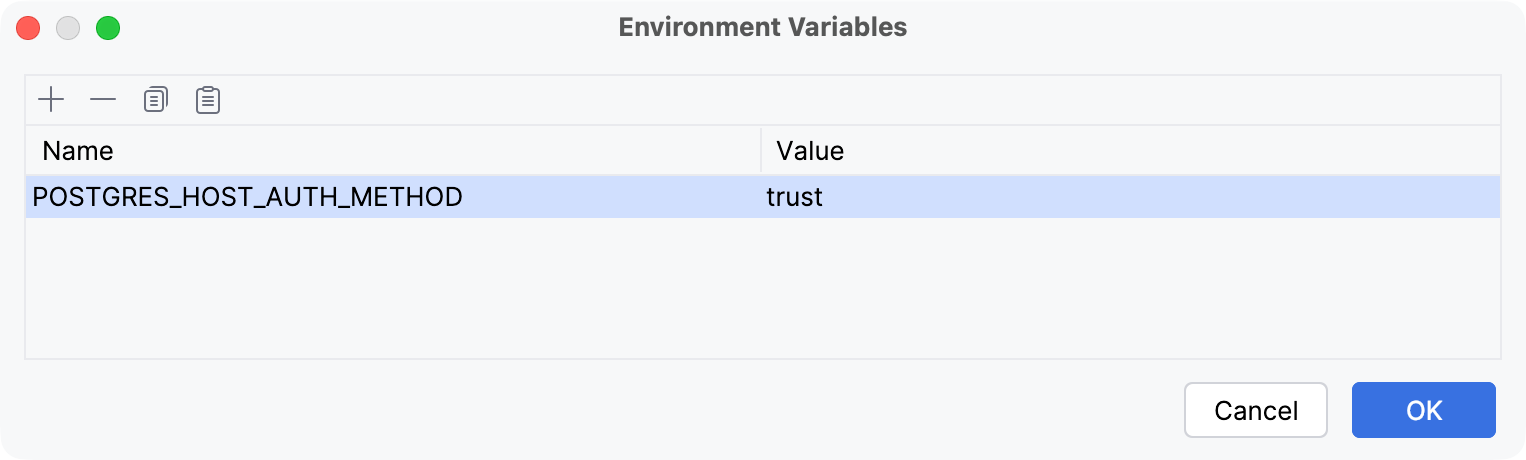
In the Name and Container name fields, specify custom names for the configuration (for example,
PostgreSQL Container) and container (for example,postgresql).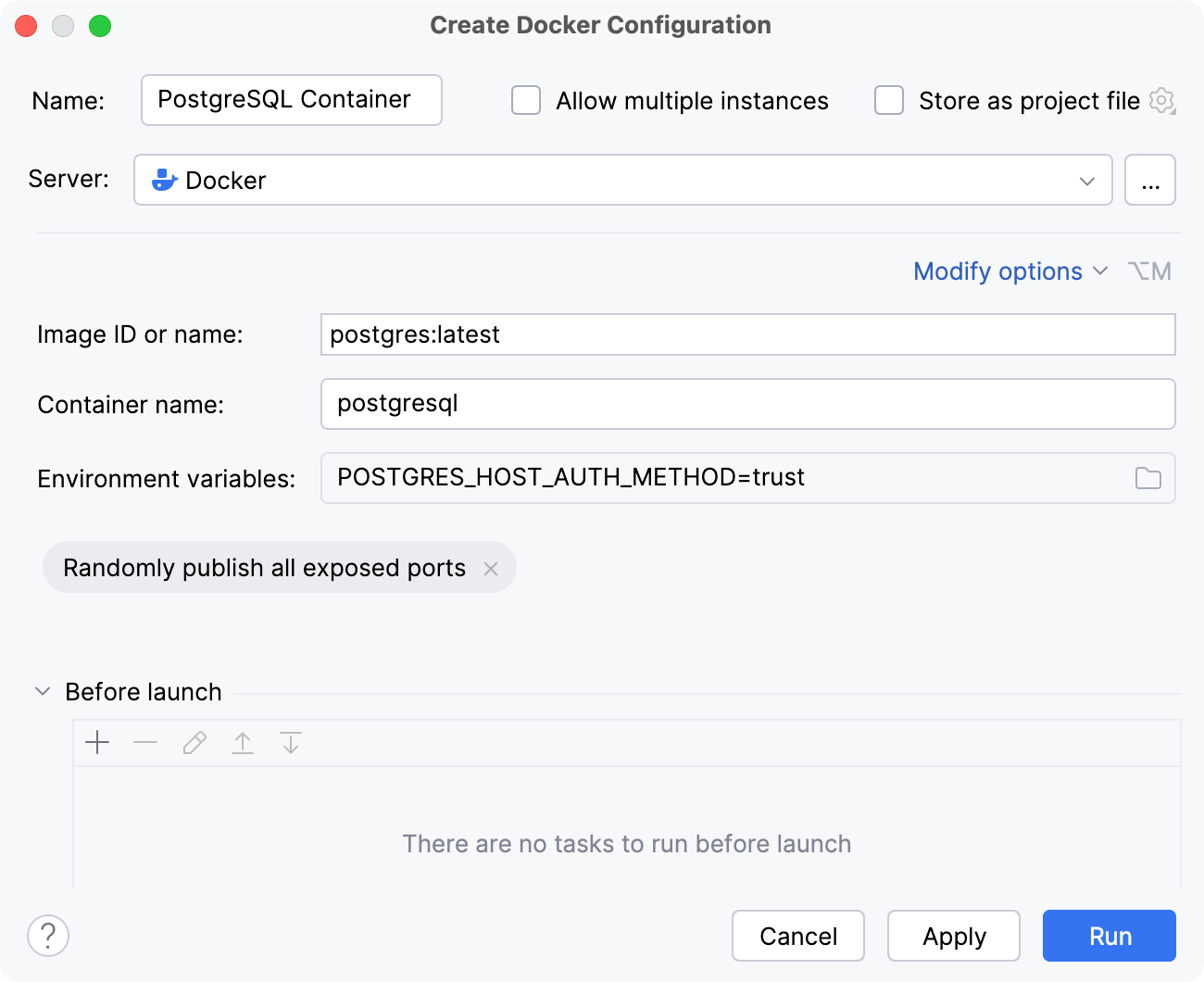
Apply the changes and click Run.
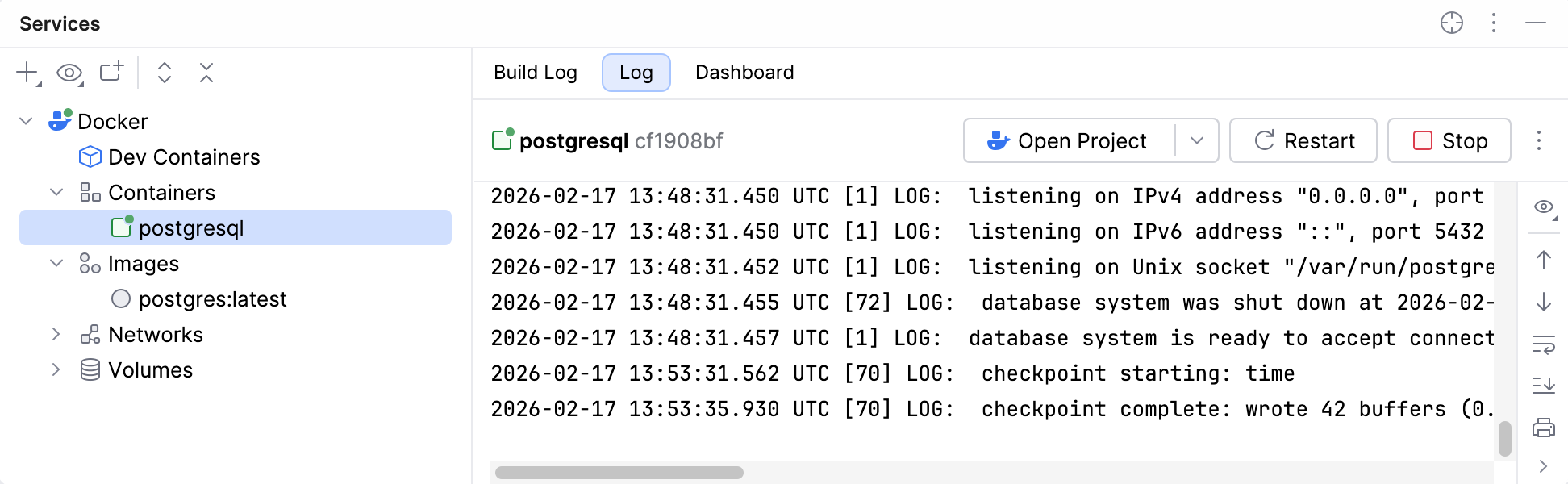
DataGrip creates and starts a new Docker container. It will appear in the Services tool window under the Containers node.
Step 3. Connect to the PostgreSQL server
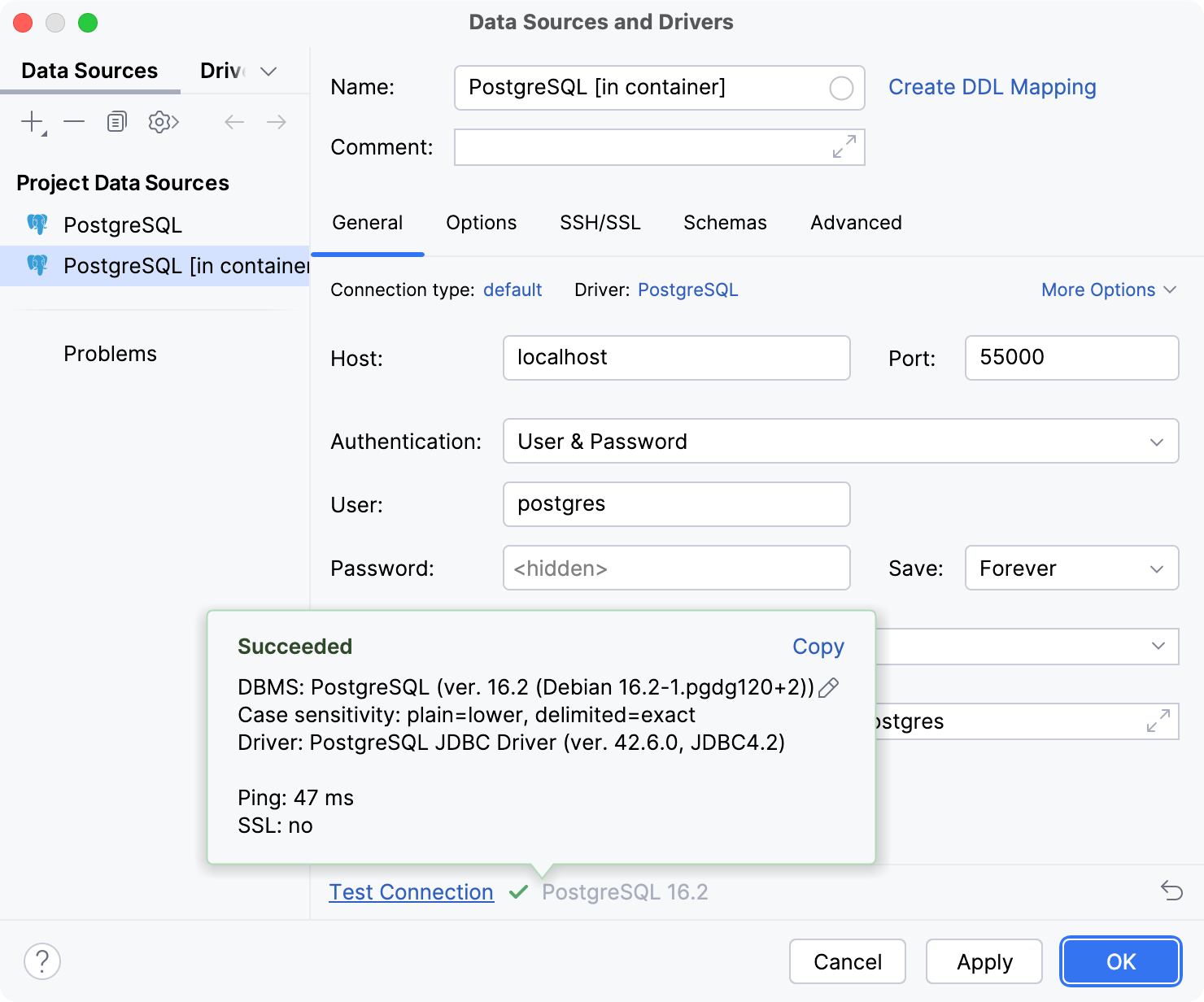
Docker automatically maps the default PostgreSQL server port 5432 in the container to a host port within the ephemeral port range (typically from 32768 to 61000). In this tutorial, we use port 55000 as an example.
Open data source properties by doing one of the following:
Navigate to .
On the Database Explorer (⌘ 1) toolbar, click
 Data Sources.
Press Ctrl+Alt+Shift+S.
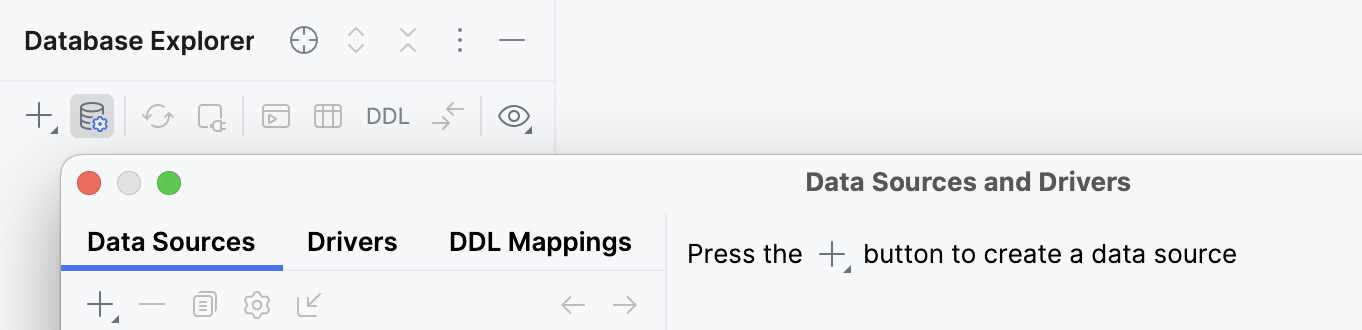
In the Data Sources and Drivers dialog, click the Add icon (
) and select PostgreSQL.Check if there is a Download missing driver files link at the bottom of the connection settings area. Click this link to download drivers that are required to interact with a database. For a direct download link, refer to the JetBrains JDBC drivers page.

Location for the downloaded JDBC drivers is the DataGrip configuration directory.
You can also use your drivers for the database instead of the provided ones. For more information about connecting to a database with your driver, refer to Add a user driver to an existing connection.
If there is no Download missing driver files link, then you already have the required drivers.
Set the host name to
localhost, the port number to55000(or whatever host port it was mapped to), the default database and user topostgres. No password is required since we usedtrustauthentication to run the PostgreSQL server.Ensure that the database connection can be established using the provided details. To do this, click the Test Connection link at the bottom of the connection details section.

If you encounter any connection issues, refer to the Cannot connect to a database page.
(Optional) By default, only the default database and schema are introspected and available to work with. If you also want to work with other databases and schemas, in the Schemas tab, select them for the introspection.
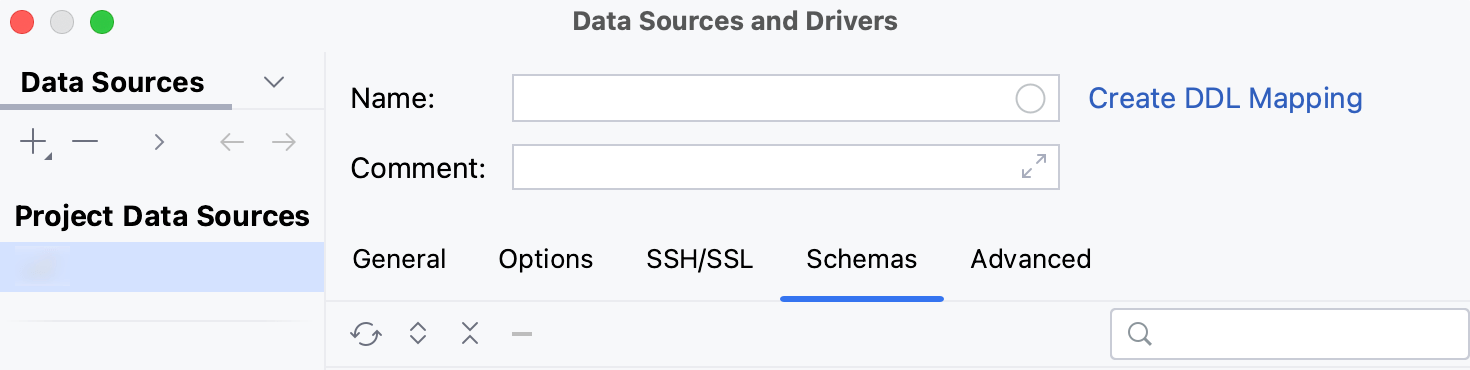
Click OK to create the data source.
Step 4. Work with your database
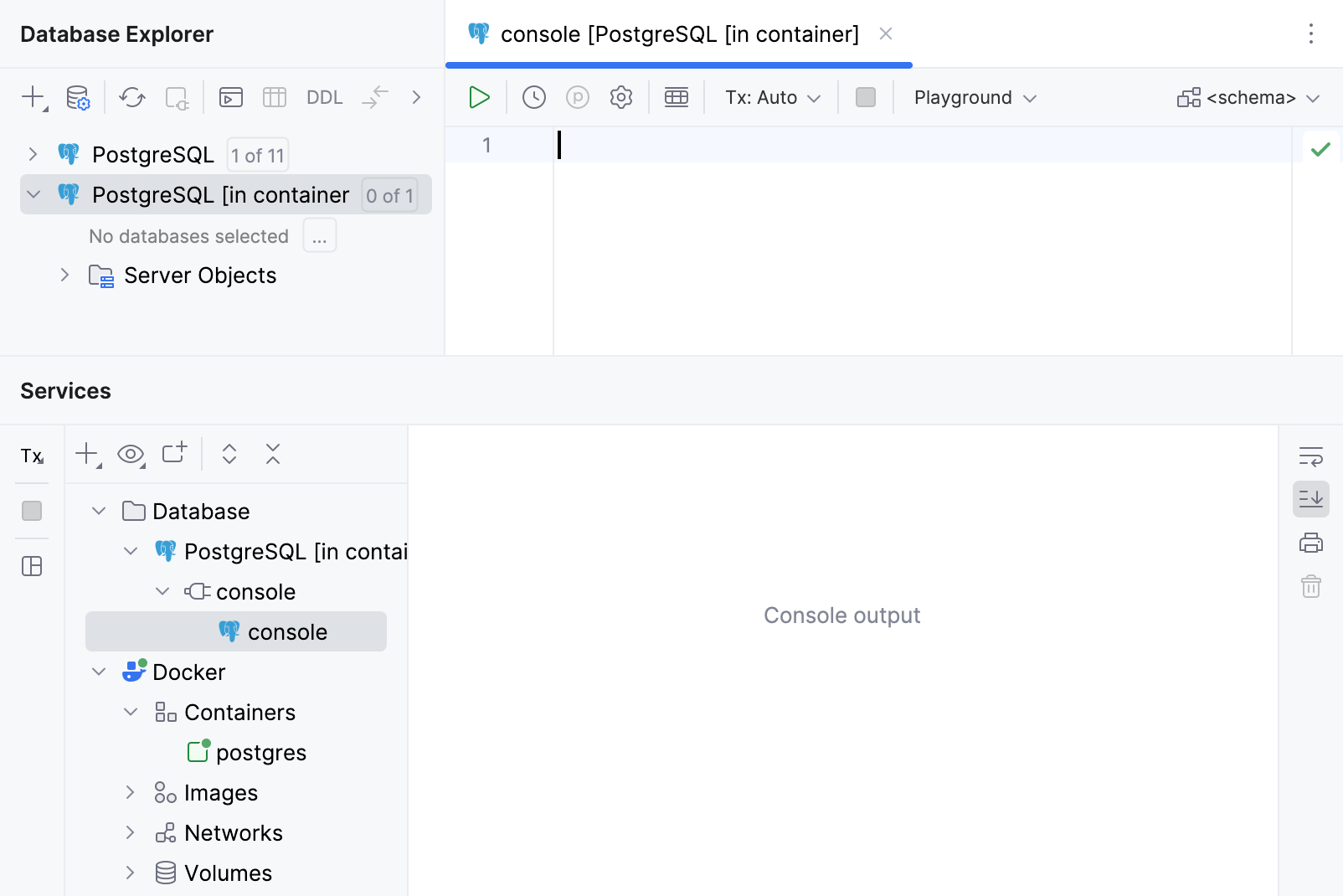
Once the database is running in the container, you can start working with it.
For more information about working with database objects in DataGrip, refer to Database objects.
To write and run queries, open the default query console by clicking the data source and pressing F4.
To view and edit data of a database object, open Data editor and viewer by double-clicking the object.
To learn about importing and running dump files in DataGrip, refer to Import and Import SQL dump files.
Summary
In this tutorial, you have learned how to:
Pull and manage Docker images
Configure and run a container from a DBMS (like PostgreSQL) image
Establish a connection between DataGrip and a database running inside a container