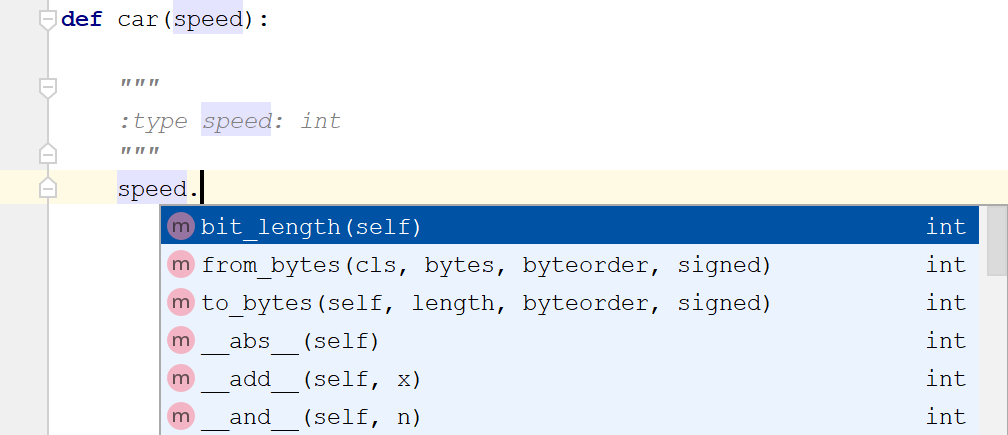
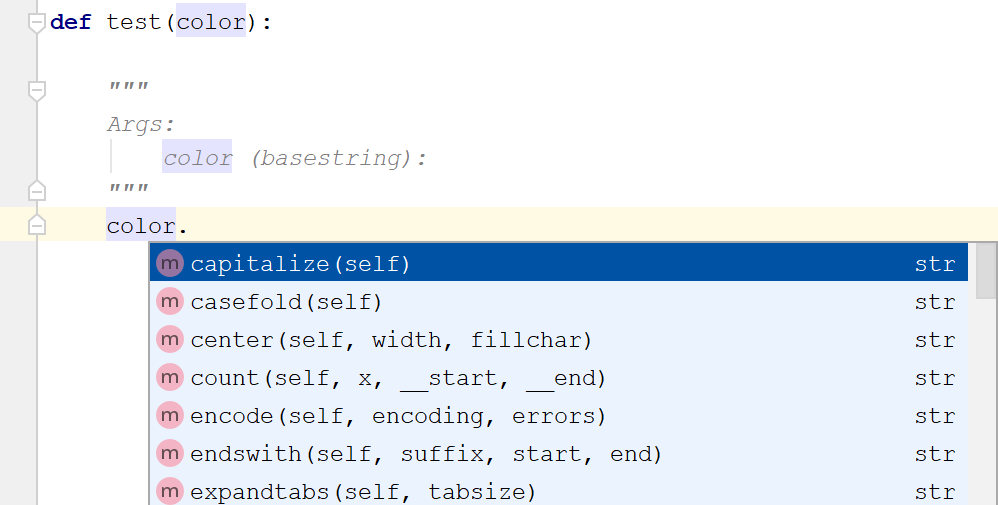
文档字符串的旧版类型语法
PyCharm 支持使用文档字符串在 Python 中指定类型的旧版方法。 在这种情况下,支持的格式有:
要选择所需的文档字符串格式,请使用设置对话框中的 Python 集成工具 页面。
Python 文档字符串中的类型语法未由任何标准定义。 因此,PyCharm 建议使用以下表示法:
语法 | 描述 |
|---|---|
| 当前作用域中可见的类 Foo |
| 来自 x.y 模块的类 Bar |
| Foo 或 Bar |
| Foo 和 Bar 的元组 |
| Foo 元素的列表 |
| 从 Foo 到 Bar 的字典 |
| 泛型类型(T-Z 保留用于泛型) |
| 上界为 Foo 的泛型类型 |
| 使用 T 参数化的 Foo |
| 以 Foo 和 Bar 为参数并返回 Baz 的函数 |
| 从 str 到 datetime 的字典列表(嵌套参数) |
指定局部变量的类型
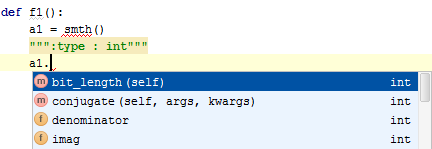
请考虑使用 :type 或 @type 文档字符串添加有关局部变量期望类型的信息:
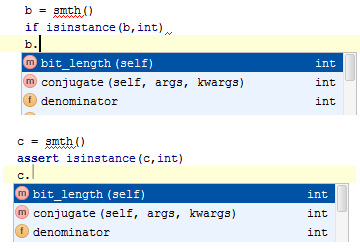
您也可以使用 isinstance 定义局部变量的期望类型:
指定字段的类型
您可以使用类型提示来指定字段的期望类型:
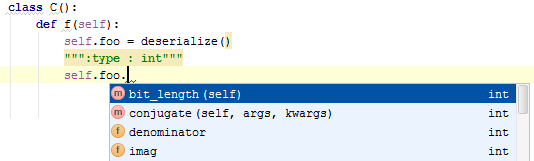
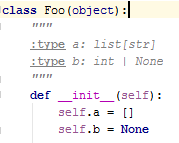
或者,您可以在类的文档字符串中指定字段的类型:
指定返回类型
使用文档字符串 :rtype 或 @rtype 指定期望的返回类型:
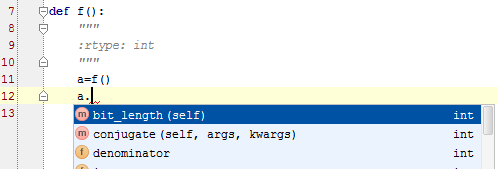
:rtype: collections.Iterable[int] # return type:'items' 的类型为generator或collections.Iterable,'a' 的类型为int,请参见以下代码:def my_iter(): global i for i in range(10): yield i items = my_iter() for a in items: print a:rtype: list[int] for my_iter # return type: 'a' 的类型为
int,请参见以下代码:def my_iter(): for i in range(10): yield i for a in my_iter(): print a
指定参数类型
请考虑添加有关期望参数类型的信息。 此信息使用文档字符串进行指定。 您可以根据所选的文档字符串格式使用不同的文档字符串,例如 :type、 @type 或 Args。 使用项目设置更改文档字符串格式()。