Node.js via SSH
Before you start
Make sure the JavaScript and TypeScript, JavaScript Debugger, Node.js, Node.js Remote Interpreter, and FTP/SFTP/WebDAV Connectivity required plugins are enabled on the Settings | Plugins page, tab Installed. For more information, refer to Managing plugins.
Configure access to an SSH server on the target remote host as described in Create SSH configurations and make sure this server is running.
Make sure your project sources are on the target remote host. This can be done in the following two ways:
Upload your project sources to the target remote host as described in Upload and download files.
Enable a network share on your local machine and mount your project folder in the target directory on the remote host.
The way you share files and folders depends on the operating system you are using. For more information, refer to your OS instructions.
Configure a Node.js runtime on a remote host accessible via SSH
Node.js runtimes via SSH are configured in the Configure Node.js Remote Runtime dialog. You can open this dialog from the JavaScript Runtime page of the Settings/Preferences dialog or later, when you create or edit a Node.js run/debug configuration for running or debugging your application.
The recommended way is to configure a remote Node.js runtime in the Settings/Preferences dialog. In this case you can set the runtime and the associated package manager as default for your project.
A remote Node.js runtime that you configure right in the Node.js run/debug configuration can be used only with this run/debug configuration.
Open the Settings/Preferences dialog (Ctrl+Alt+S) and go to .
Click
 next to the Node runtime field.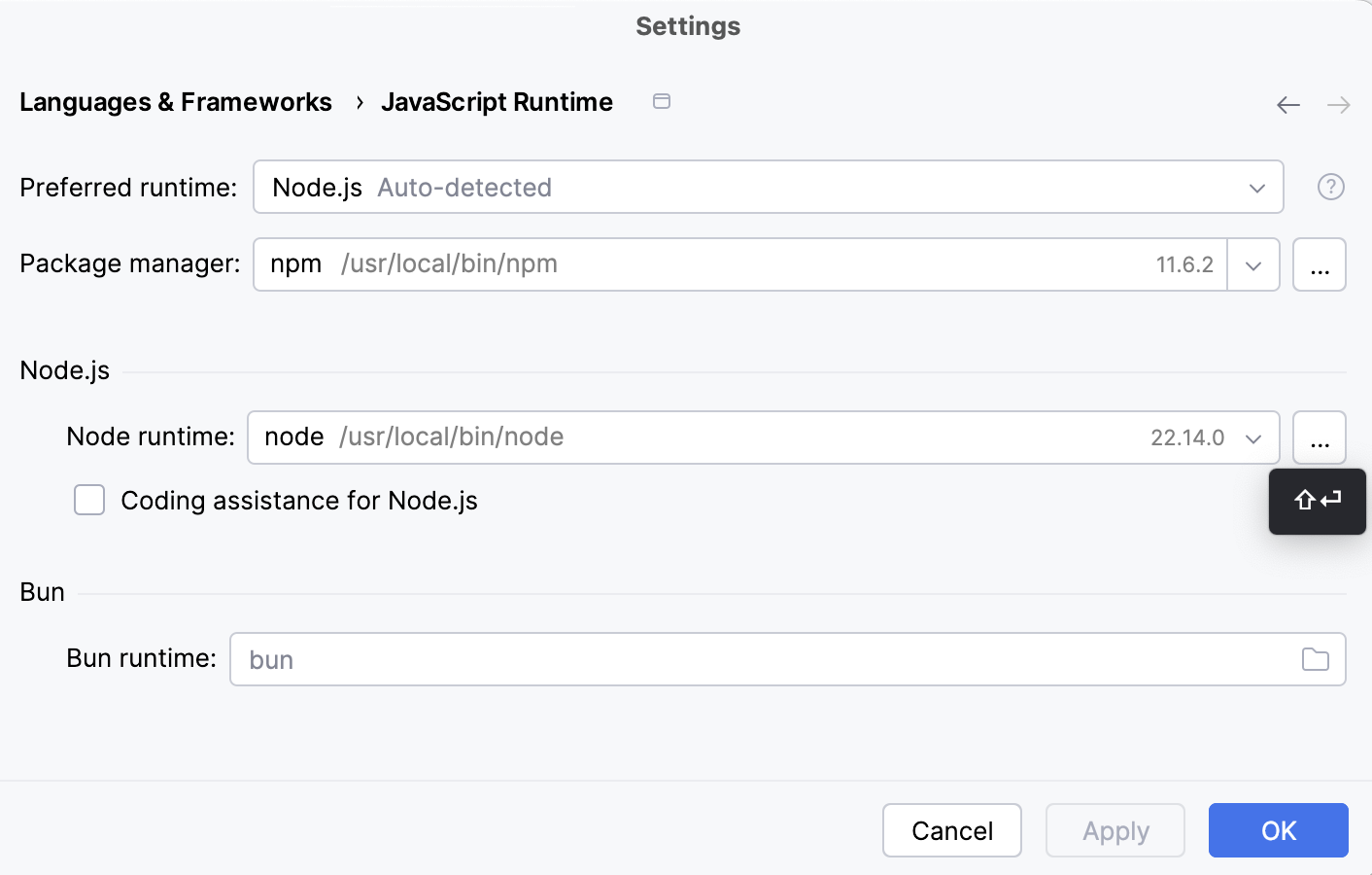
In the Node.js Runtimes dialog with a list of all the currently configured runtimes, click
 on the toolbar and select Add Remote from the context menu.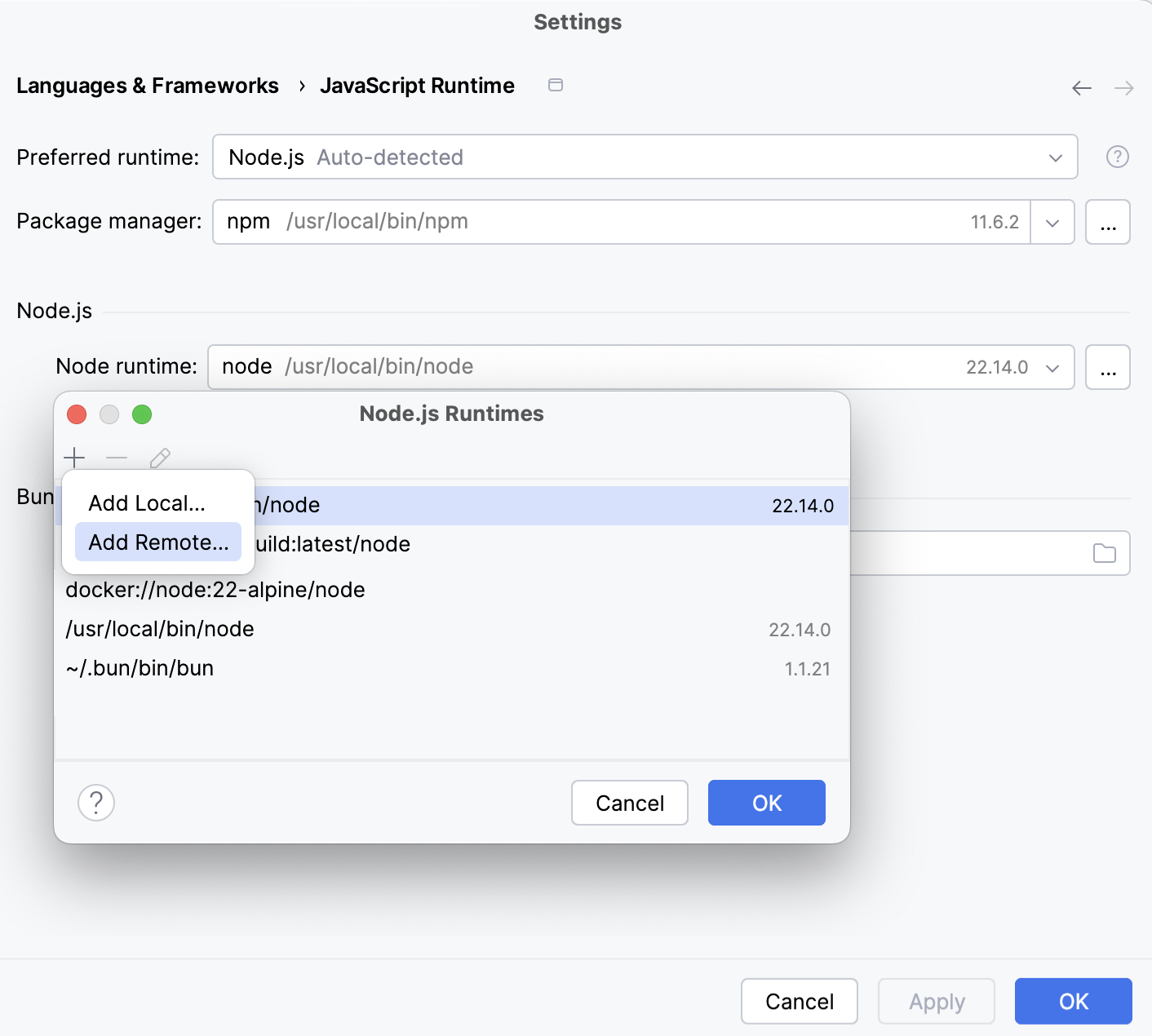
In the Configure Node.js Remote Runtime dialog that opens, select SSH.
Select an SSH configuration to use.
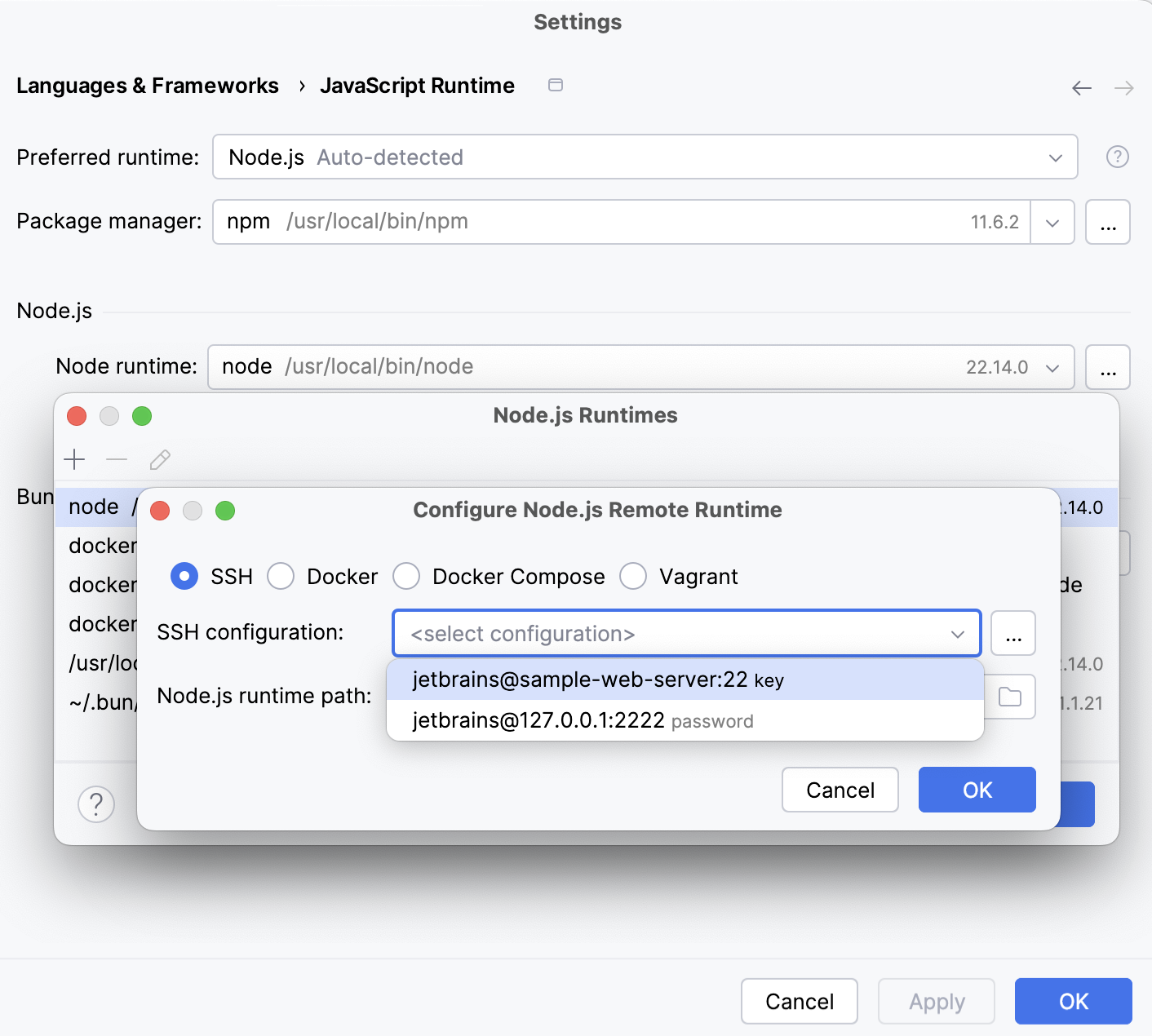
Alternatively, click
and create a new SSH configuration as described in Create SSH configurations.Click OK to return to the Node.js Runtimes dialog where the new runtime is added to the list.
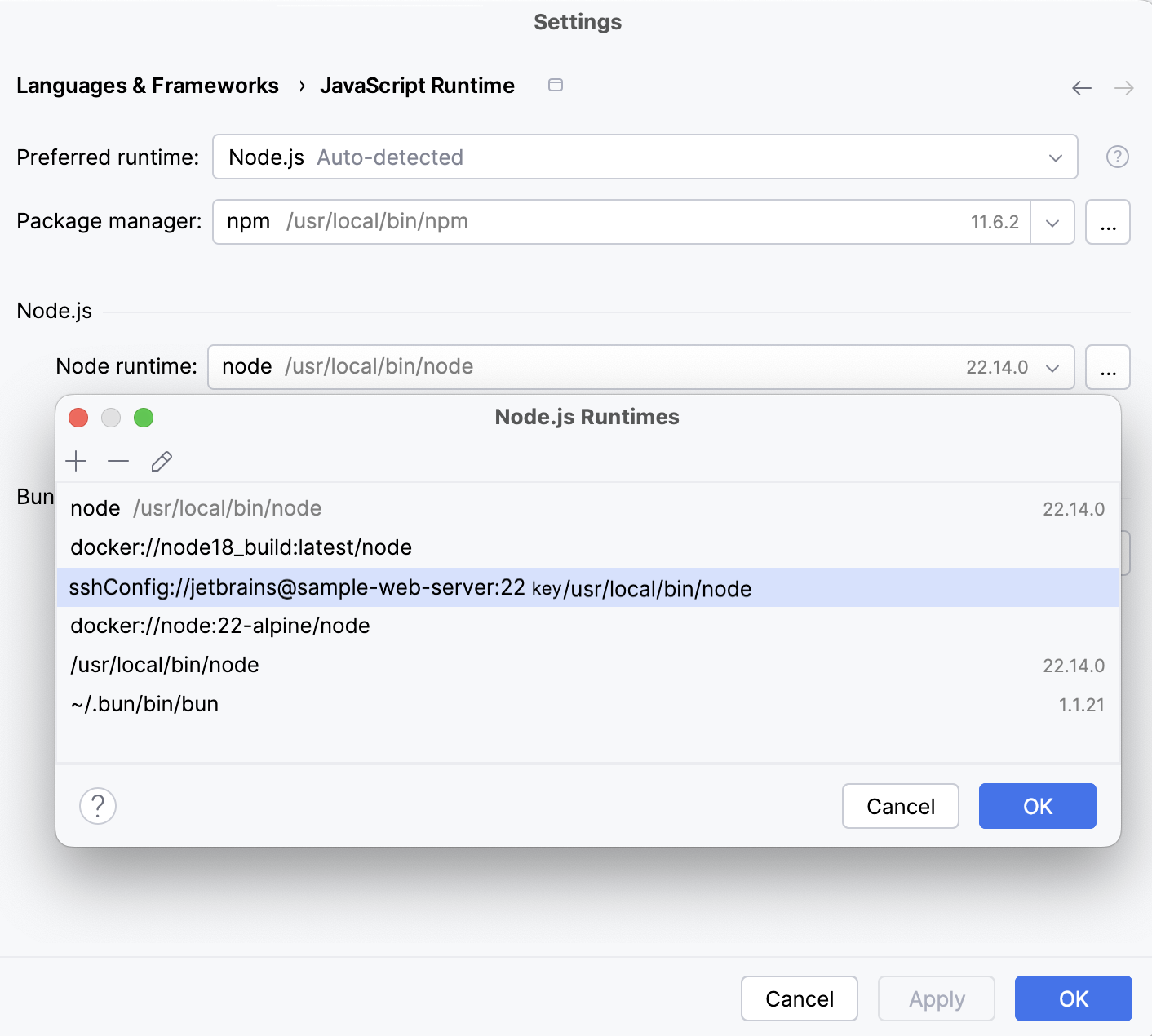
To set the newly configured runtime as the project default, select it in the list and click OK to return to the JavaScript Runtime dialog.
JetBrains Rider automatically uses this interpreter every time you select the
Projectalias from Node runtime lists, for example, when creating run/debug configurations.To use the package manager associated with the new runtime for managing your project dependencies, set this package manager as default in your project. To do that, specify the location of the package manager in the Package manager field.
The default location for npm executable is
/usr/local/lib/node_modules/npm.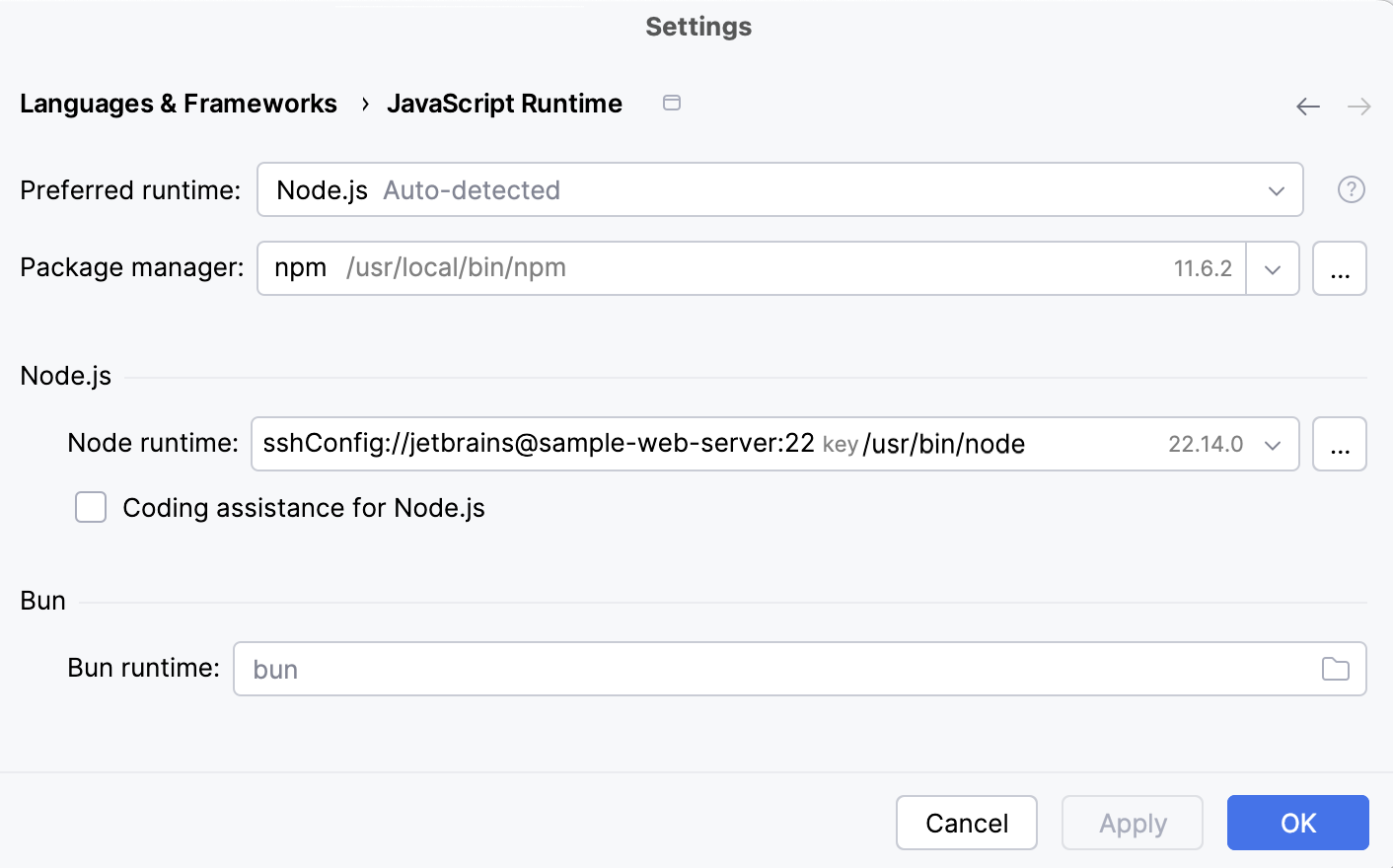
Create a Node.js run/debug configuration
Go to . In the Edit Configuration dialog that opens, click
on the toolbar and select Node.js from the context menu. The Run/Debug Configuration dialog opens.In the File field, specify the path to the main file of the application that starts it (for example, bin/www for Express applications).
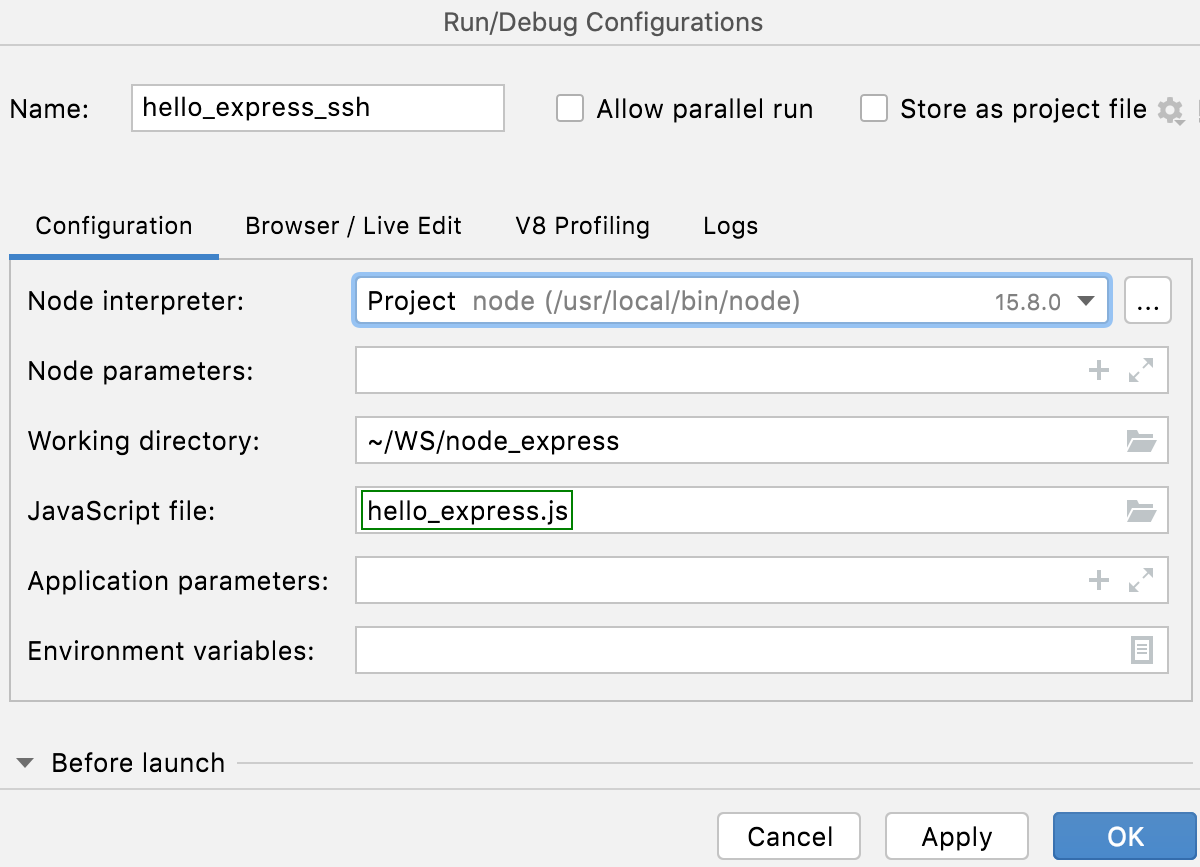
If necessary, specify some optional settings as described in Running and debugging Node.js applications.
From the Node runtime list, select the relevant remote Node.js runtime accessible via SSH.
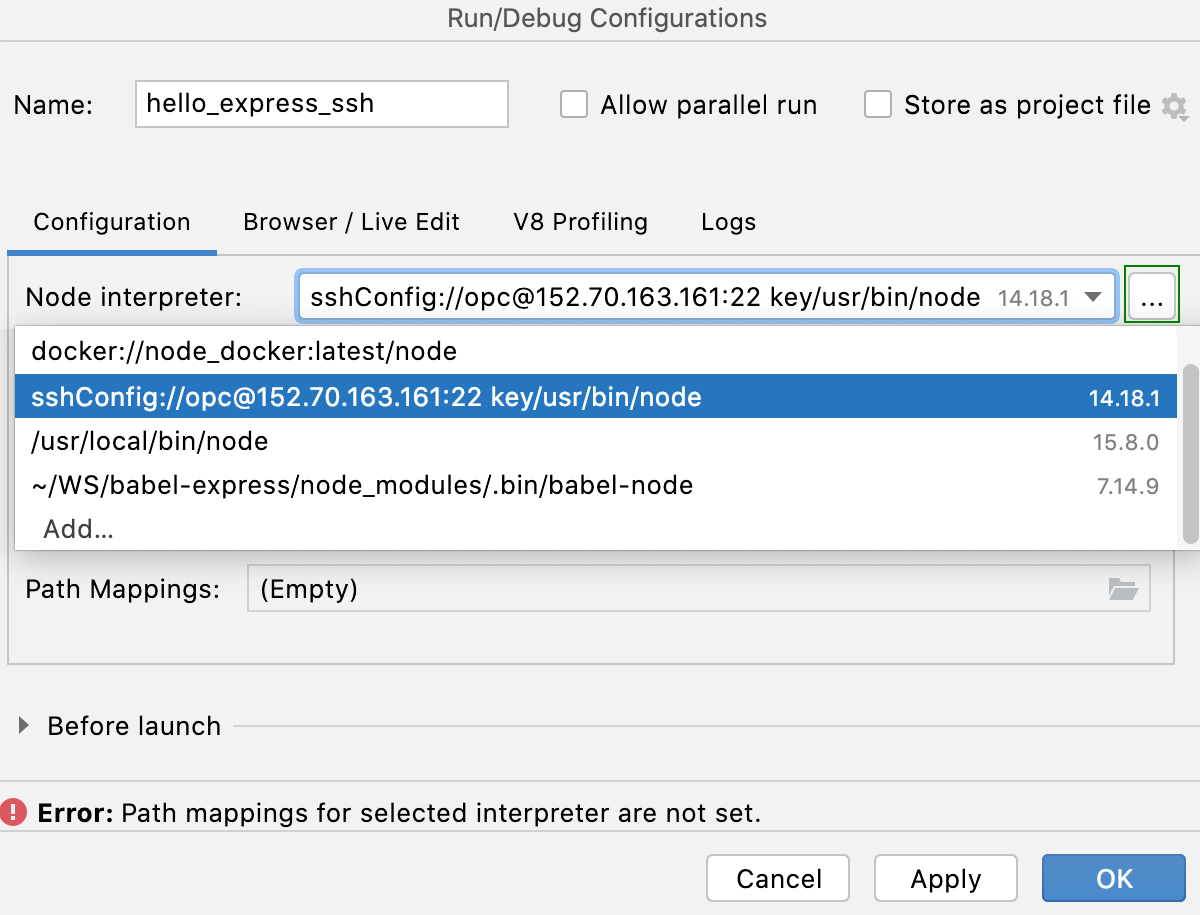
Alternatively, Click
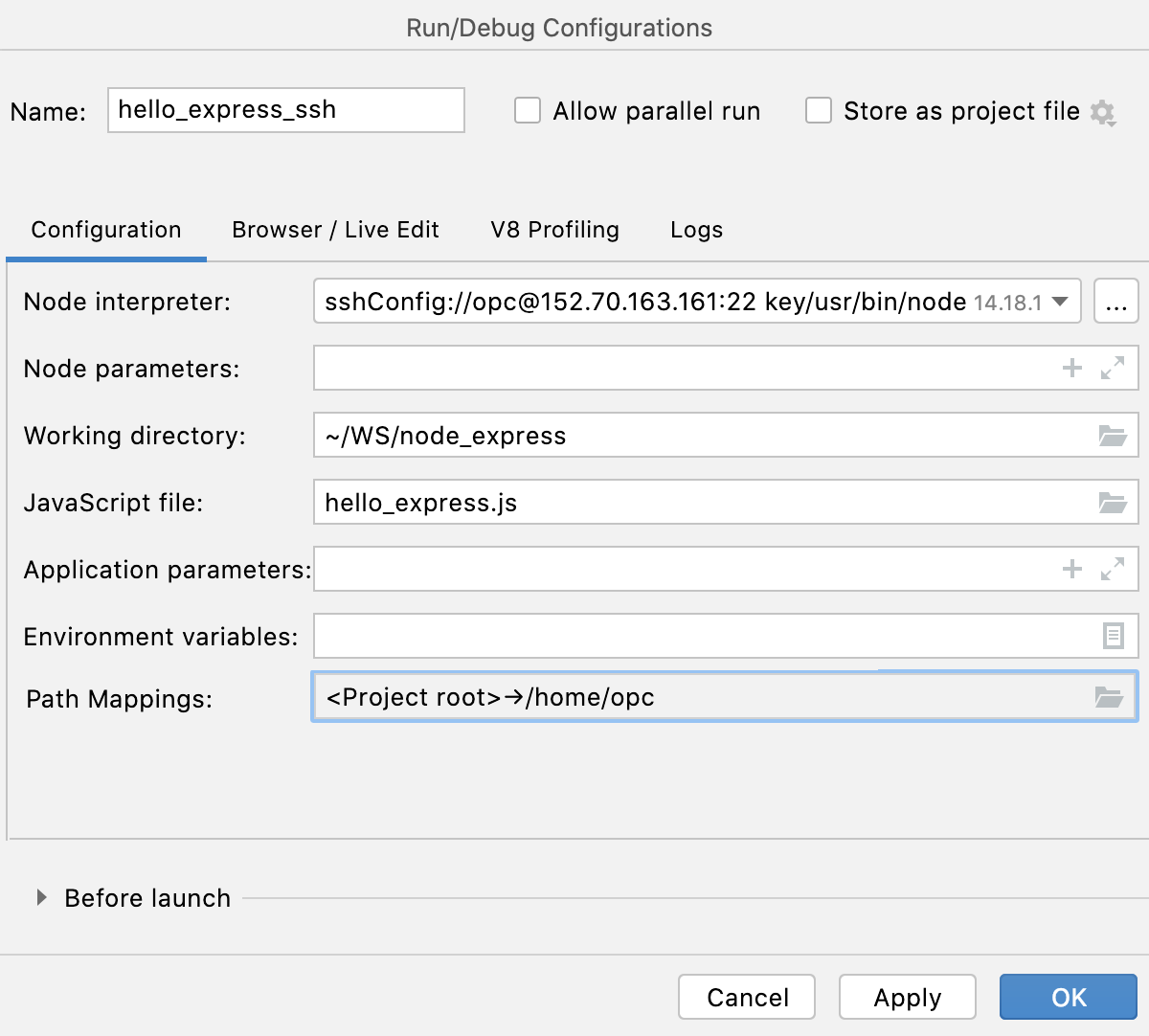
next to the Node runtime field and configure a remote Node.js runtime as described above.Map the local folders with the folders on the remote host.
Click
 next to the Path mappings field or press Shift+Enter.
In the Edit Project Path Mappings dialog that opens, click
on the toolbar.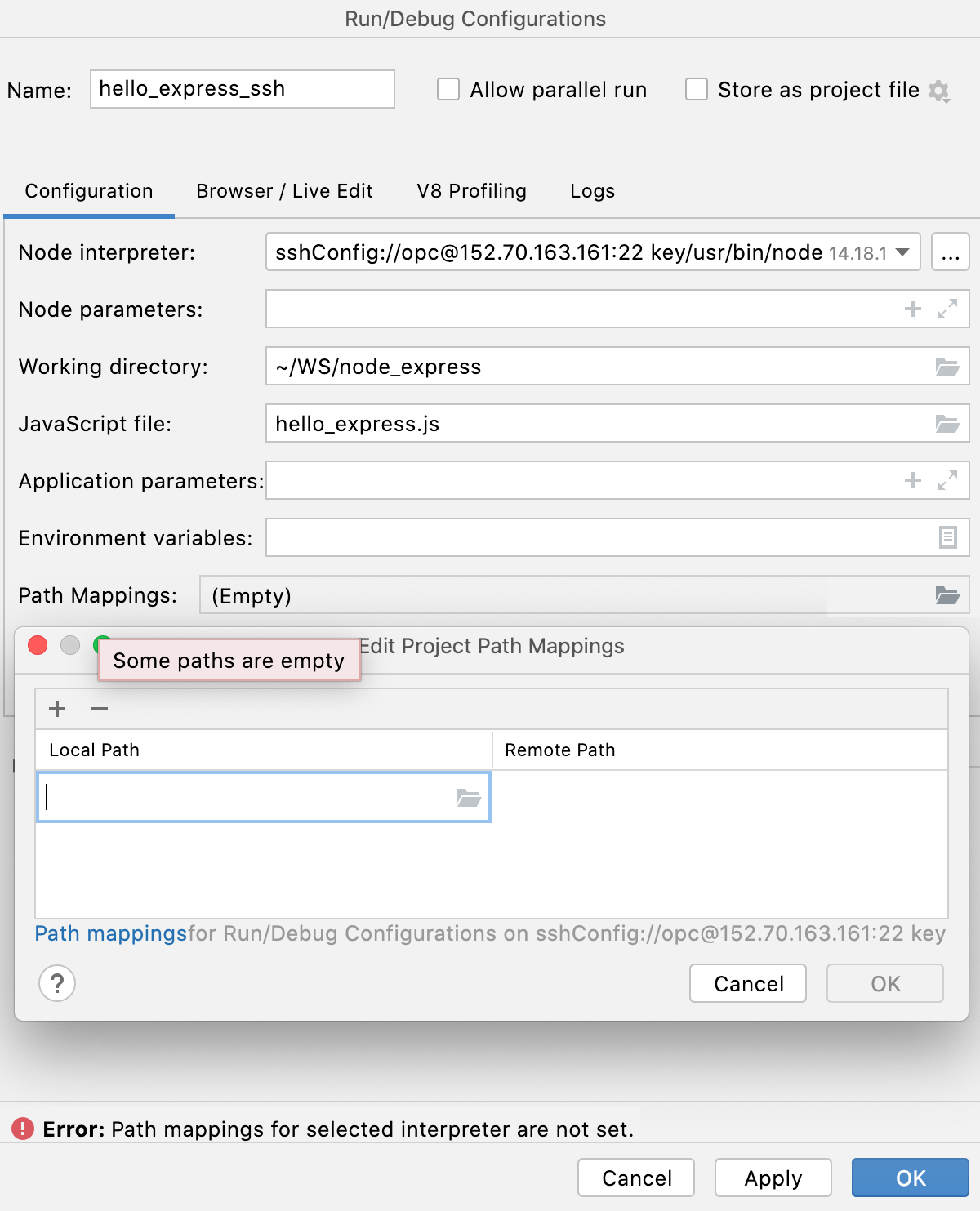
Specify the paths to the local folders and the corresponding folders on the remote host. For example, you can map the project folder to /home/opc.
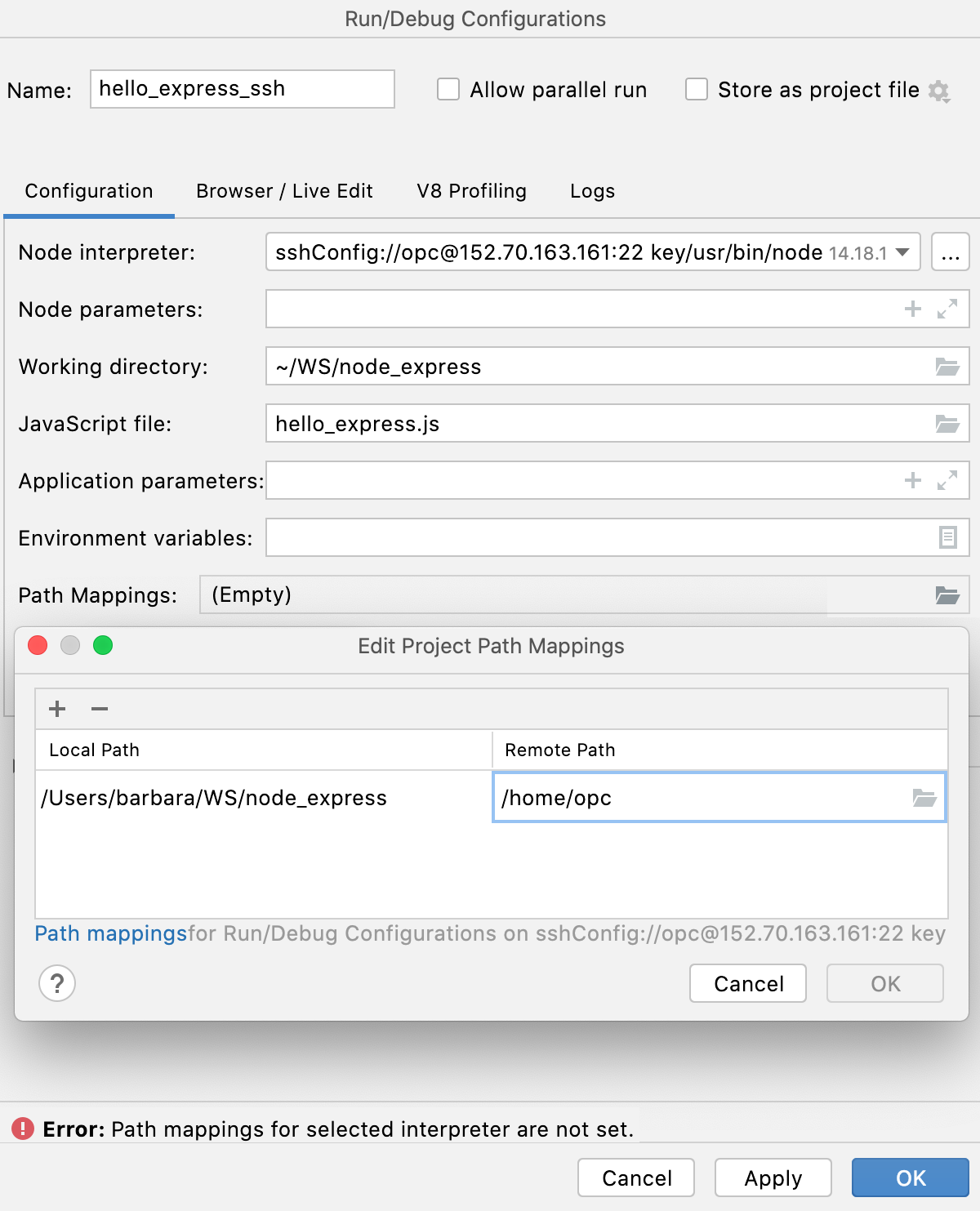
When you click OK, you return to the Run/Debug Configurations dialog where the new mapping is shown in the Path mappings field.
Run your application
From the Run/Debug Configurations widget list on the toolbar, select the newly created Node.js configuration and click
 next to it.
 Alternatively, create a Node.js run/debug configuration as described above or modify an existing one and click Run in the dialog.
Debug your application
Set the breakpoints in the Node.js code as necessary.
Create a Node.js configuration as described above, select it from the Select run/debug configuration list on the toolbar, and click
 next to the list.
Proceed as when starting the debugger together with a Node.js application locally.