TeamCity Pipelines Roadmap
Pipelines reimagine the familiar TeamCity experience with a more intuitive visual interface. While pipelines are powered by the same reliable backend, we have intentionally moved away from our traditional approaches, simplified core concepts and redesigned them from the ground up.
We expect this approach to pay off as the initiative evolves, but it also means pipelines currently offer less customization and fewer features than classic build configurations. As we determine which areas to prioritize next, your feedback is especially valuable. Our goal is to build a CI/CD solution that truly fits your needs, and your input is essential in helping us shape it.
Join our Slack to share and discuss your ideas, or send bug reports to Zendesk / YouTrack.
Planned features
All build steps and features
We have implemented a mechanism that allows pipelines to reuse familiar build steps and features. At the moment, only a few of them are publicly available: .NET, Build Files Cleaner (Swabra), XML Report Processing, and a few others. We expect the majority of build features and steps available in pipelines by default in the 2026.3 update.
Job failure conditions
We plan to introduce failure conditions similar to those in build configurations. This will give you finer control over when a job is marked as failed and allow downstream jobs to run even if earlier ones fail.
Execution timeouts
We’re exploring timeout settings that let you define maximum run durations. Jobs or pipelines that exceed the threshold would be automatically canceled and marked as failed.
PR event triggers
Pipelines can already identify pull requests and use the commit trigger to automatically build these pull request changes. To provide better granularity and control, we expect to introduce separate triggers for core pull request events: pull request opened, new comment added, and so on.
GitHub Checks support
Pipelines are capable of reporting basic run statuses (started, failed, successful, and more to the VCS. GitHub Checks API support would greatly extend that functionality, as it allows external systems to report detailed feedback, specific line-by-line annotations, and re-run individual tasks.
Recipes support
Recipes complement custom build steps by letting you package commonly used logic into reusable assets and download community-created steps from JetBrains Marketplace. Adding recipe support would greatly expand what pipelines can do.
Job and build step execution conditions
Classic build configurations support step execution conditions that specify criteria for when a step should run. We plan to add a similar feature for steps inside pipeline jobs.
In addition, we plant to add similar functionality to the jobs themselves. These options would allow you to skip a job entirely if the specific criteria are met.
Typed parameters
Pipelines currently support only single-value text parameters (including masked secret parameters for sensitive values). We aim to implement more parameter types available in classic build configurations, such as checkboxes, multi-selects, and values pulled from external sources.
Templates
Templates help configure multiple build configurations that share similar settings. We plan to bring an equivalent concept to pipelines, enabling you to define reusable YAML templates.
Implemented features
This section lists planned features that were implemented in previous versions.
Debug Jobs
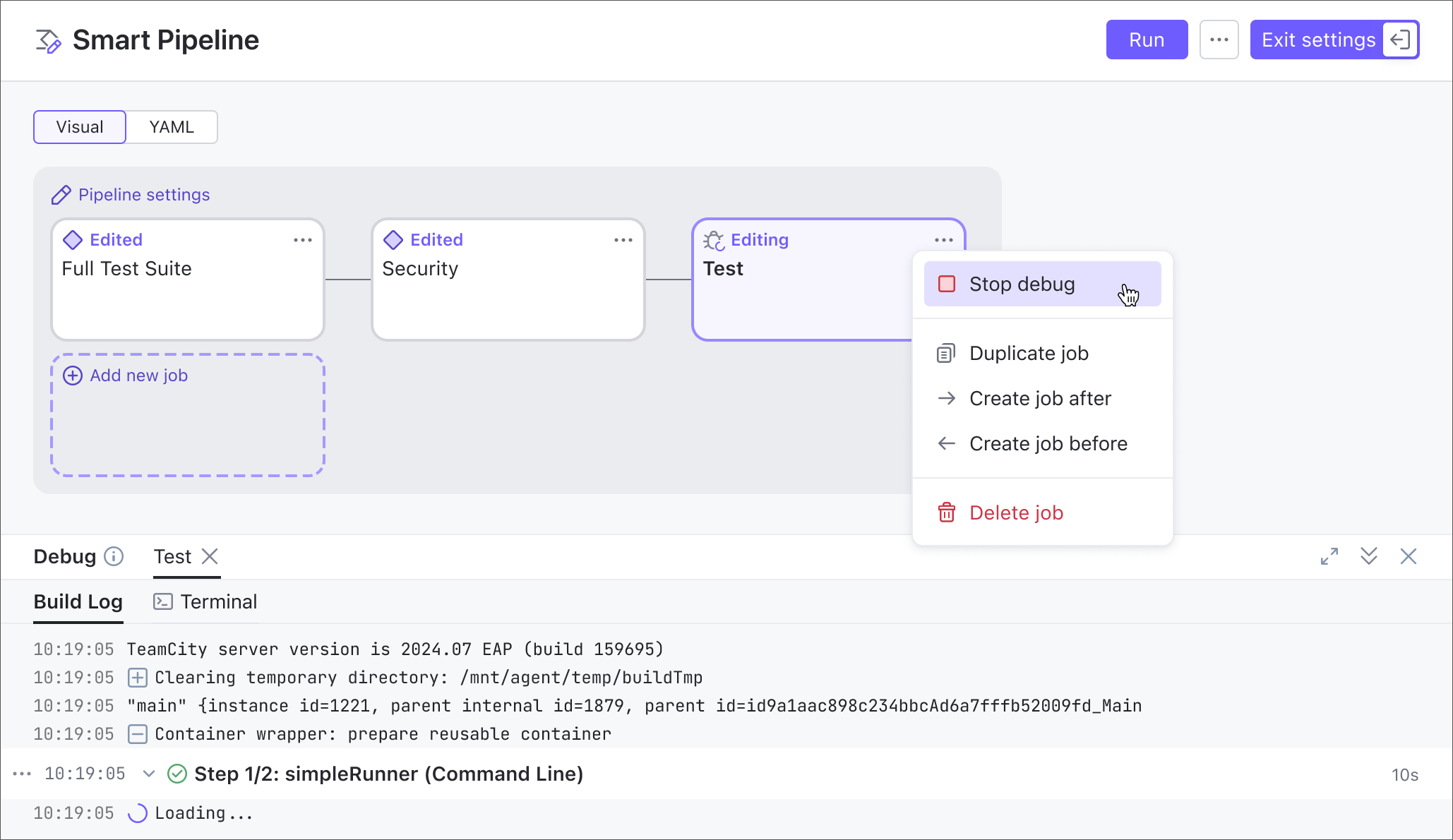
You can now test a single pipeline job without triggering the whole pipeline. Open a job's ellipsis menu and choose Debug — TeamCity runs just that job (and anything it depends on) with its current settings, complete with a live build log and terminal access to the agent that picked it up.
Learn more: Debug Jobs
Improved Branch Handling
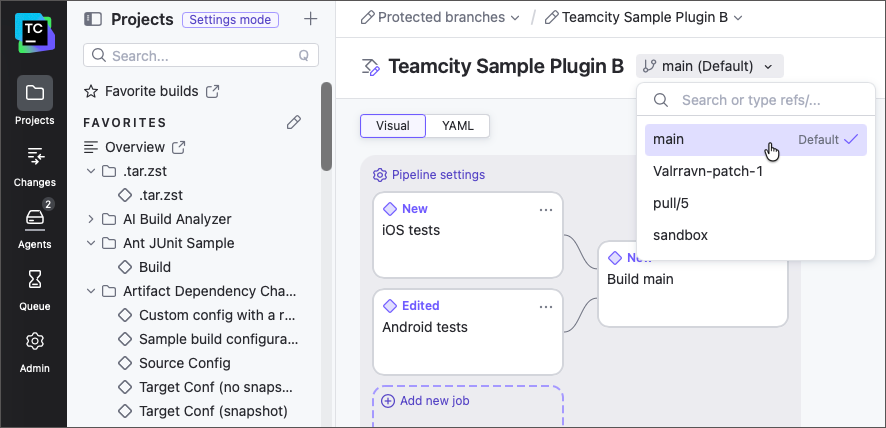
Pipelines are now better equipped to work with feature branches: in edit mode, you can switch between different repository branches and design unique workflows for each of them.
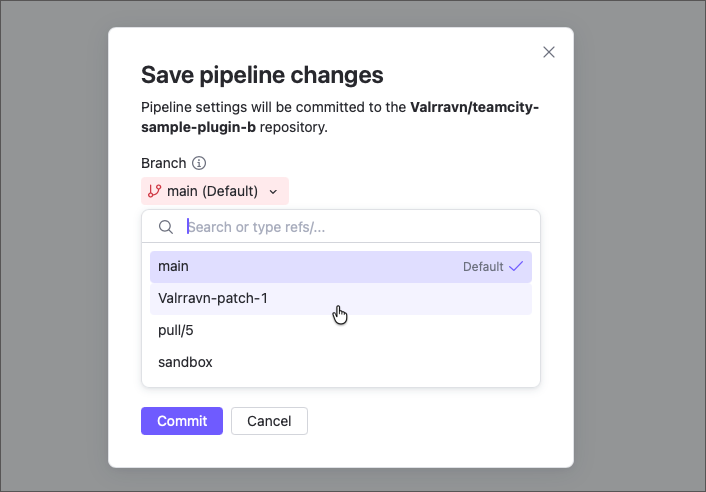
In addition, TeamCity now handles protected branches correctly. An attempt to commit edits made in the UI to a protected branch now results in a clear warning, and a suggestion to save the updated .yml file to another branch.
Learn more: Feature Branches
Run Through Failures
When setting up job dependencies, you can now enable Run job even if upstream fails so a job keeps running even when the upstream job it depends on fails, instead of being automatically canceled.
The pipeline run is still marked as failed overall, but this lets you guarantee that specific jobs (for example, cleanup or notification steps) always run.
Learn more: Dependencies
Promote pipeline runs
Promote — the button that triggers the downstream part of a build chain from an older, already-finished build — now works for pipelines, not just build configurations.
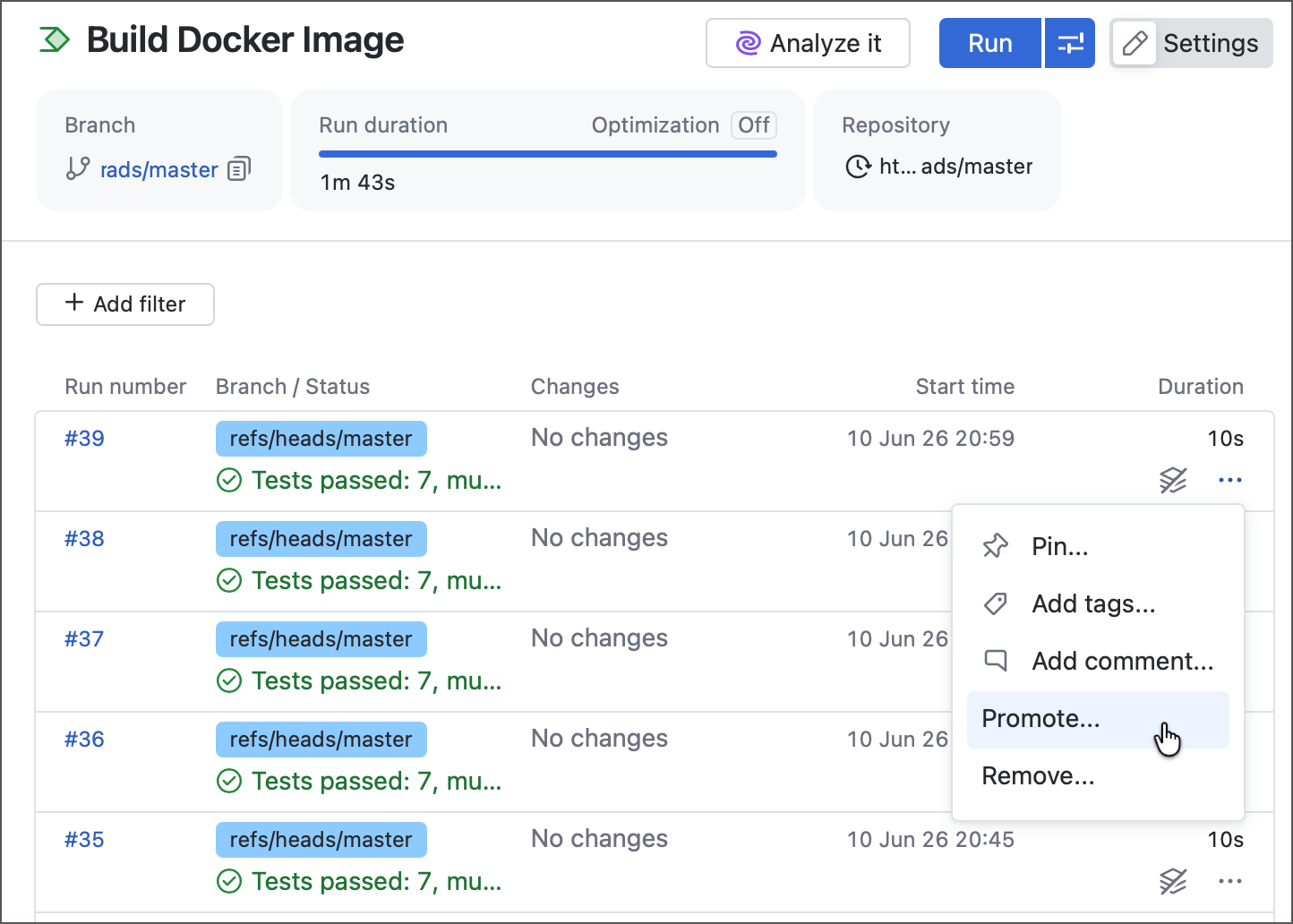
For example, promote a successful "Build Docker image" run into the "Upload to DockerHub" configuration or pipeline to re-deploy that artifact without rebuilding it.
Learn more: Promote a build
AI enhancements
TeamCity MCP endpoint now allows your AI agents to retrieve three additional tools for managing pipelines: teamcity_pipeline_get, teamcity_pipeline_post, and teamcity_pipeline_delete. In addition, you can now use AI Assistant for help with configuring and debugging pipelines.
Learn more: Integration with AI Agents
Integration with build chains
Build chains can now consist of both build configurations and pipelines.
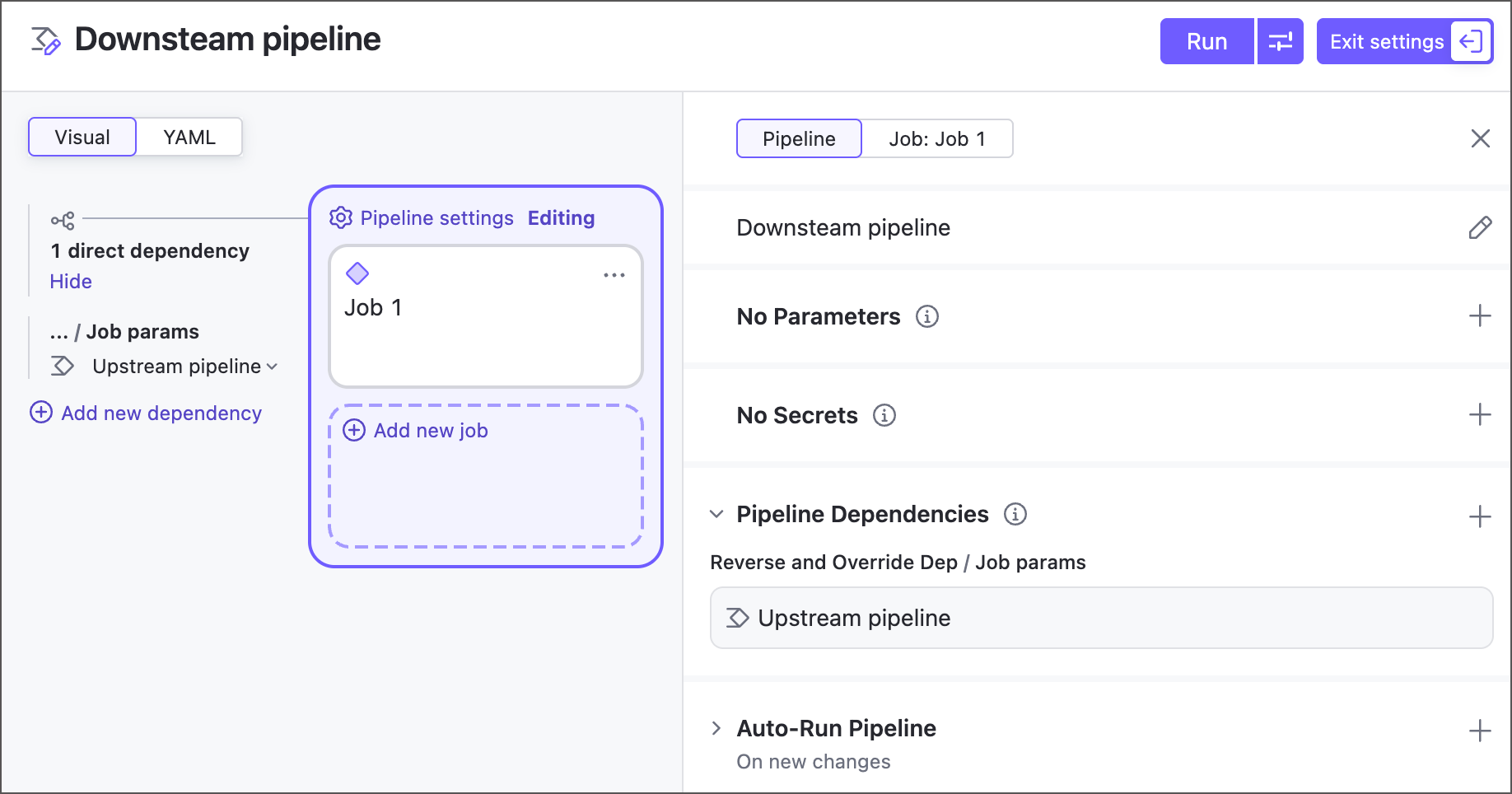
When configuring pipeline dependencies, you have the same familiar options as for build configuration snapshot dependencies: revision synchronization mode, execution policy for failed dependencies, and more.
Learn more: Pipeline Dependencies.
Kotlin DSL support
If a parent project stores its settings in Kotlin DSL, you now have the option to continue storing pipeline settings in a remote YAML, or include its settings in Kotlin format to the project's .kts file.
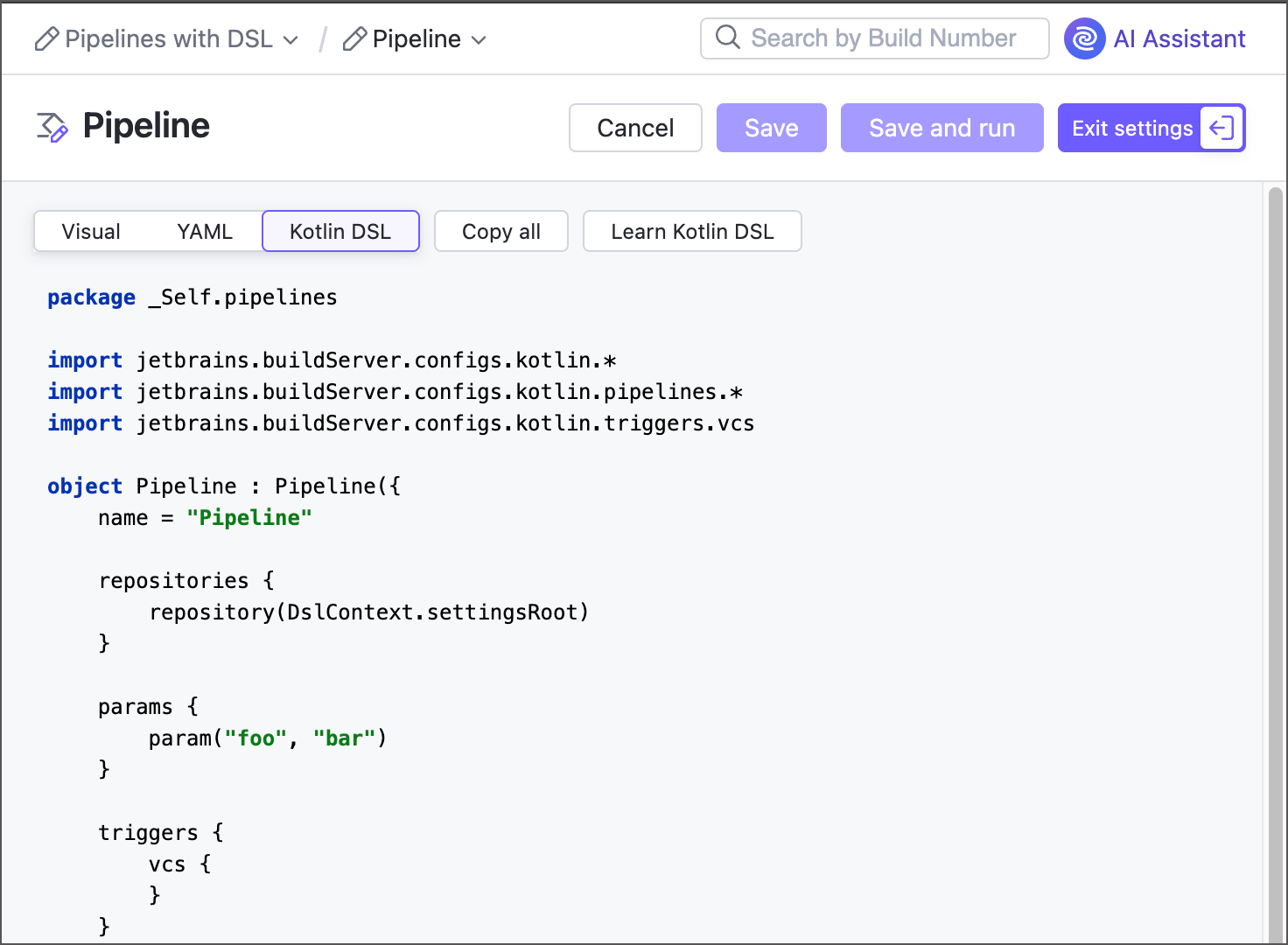
This change benefits teams that prefer Kotlin DSL for their configuration-as-code workflows, and do not wish to have "gaps" in their configuration files.
Learn more: Pipelines Kotlin DSL.
Custom runs
Running custom builds is a great way to trigger a tailored build sequence without changing configuration settings. You can schedule a build, pick a specific agent, override parameters, skip dependencies, and more. Starting from version 2026.1, this functionality is available for both classic build configurations and pipelines.
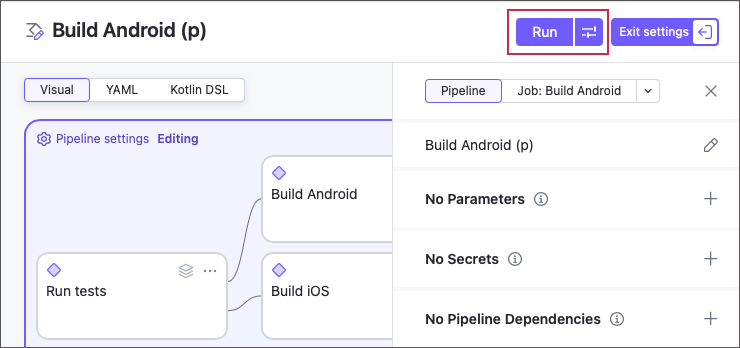
Learn more: Running Custom Build.
Job-level build features
Version 2026.1 adds support for build features that were previously available only in build configurations. In pipelines, you can now add these features to jobs just as you add build steps.
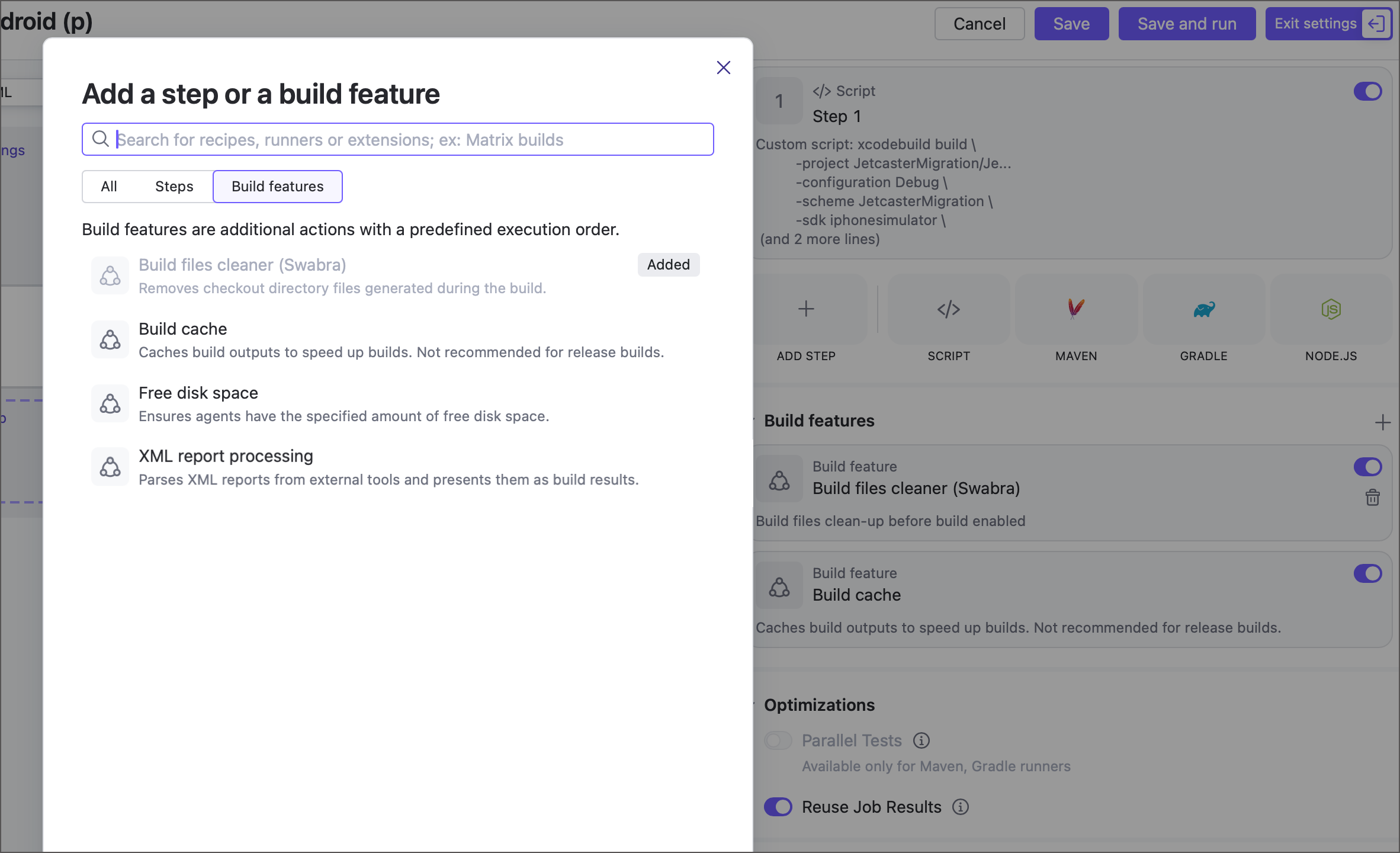
At the moment, pipelines support four such features, not including natively integrated ones like the commit status publisher:
We expect to support more features based on your feedback.
Learn more: Build Features.
.NET build steps
In version 2025.11, we're bringing the familiar .NET build step to pipelines. Instead of one single step with dozens of settings that depend on the selected step command, pipelines split this build step into a series of task-specific units.
Learn more: .NET.
Project registry connections support
Starting with version 2025.11, Docker and NPM connections owned by projects are available as integrations in pipeline and job settings.
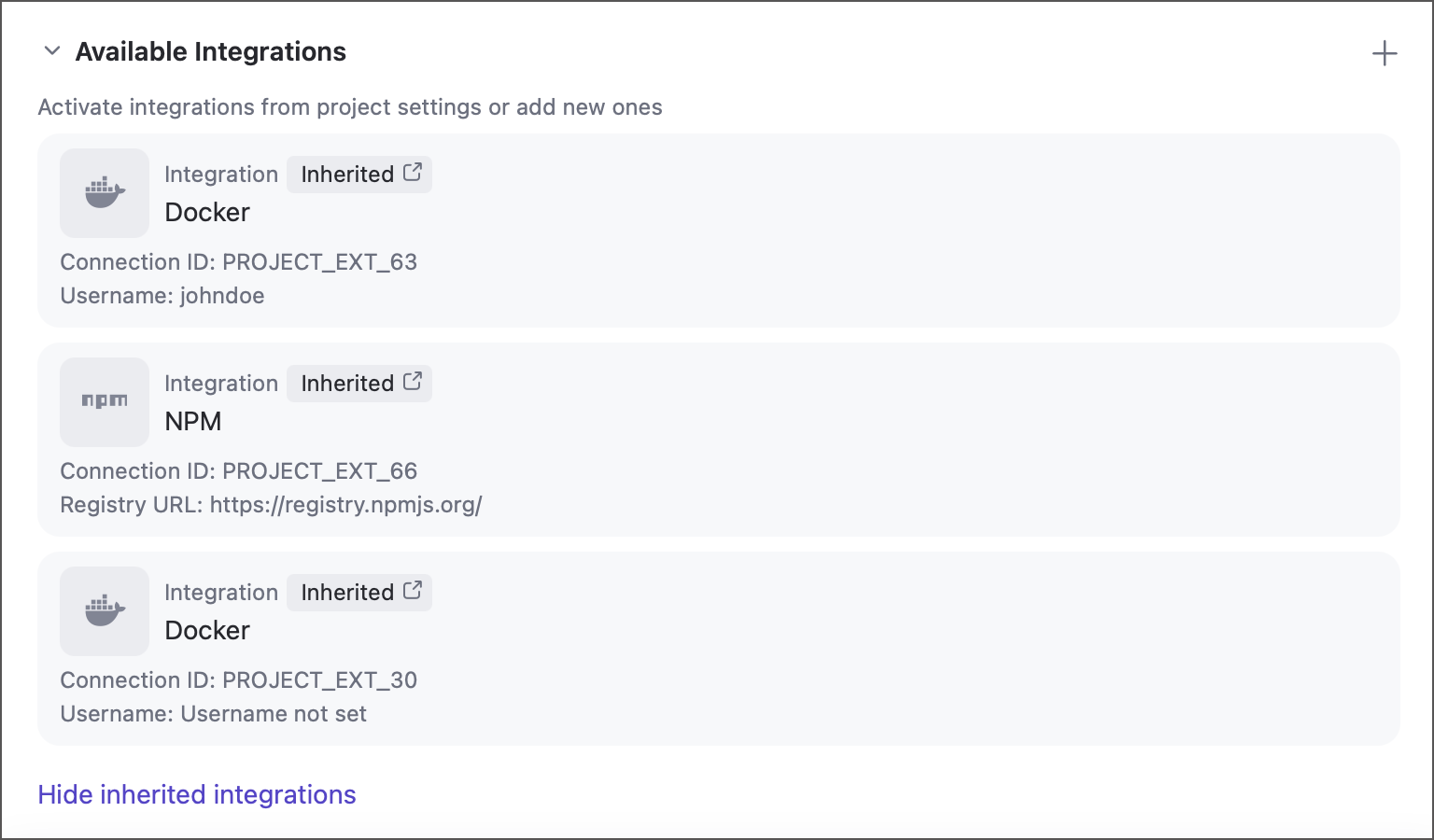
Learn more: Pipeline Settings.
Advanced build and test actions
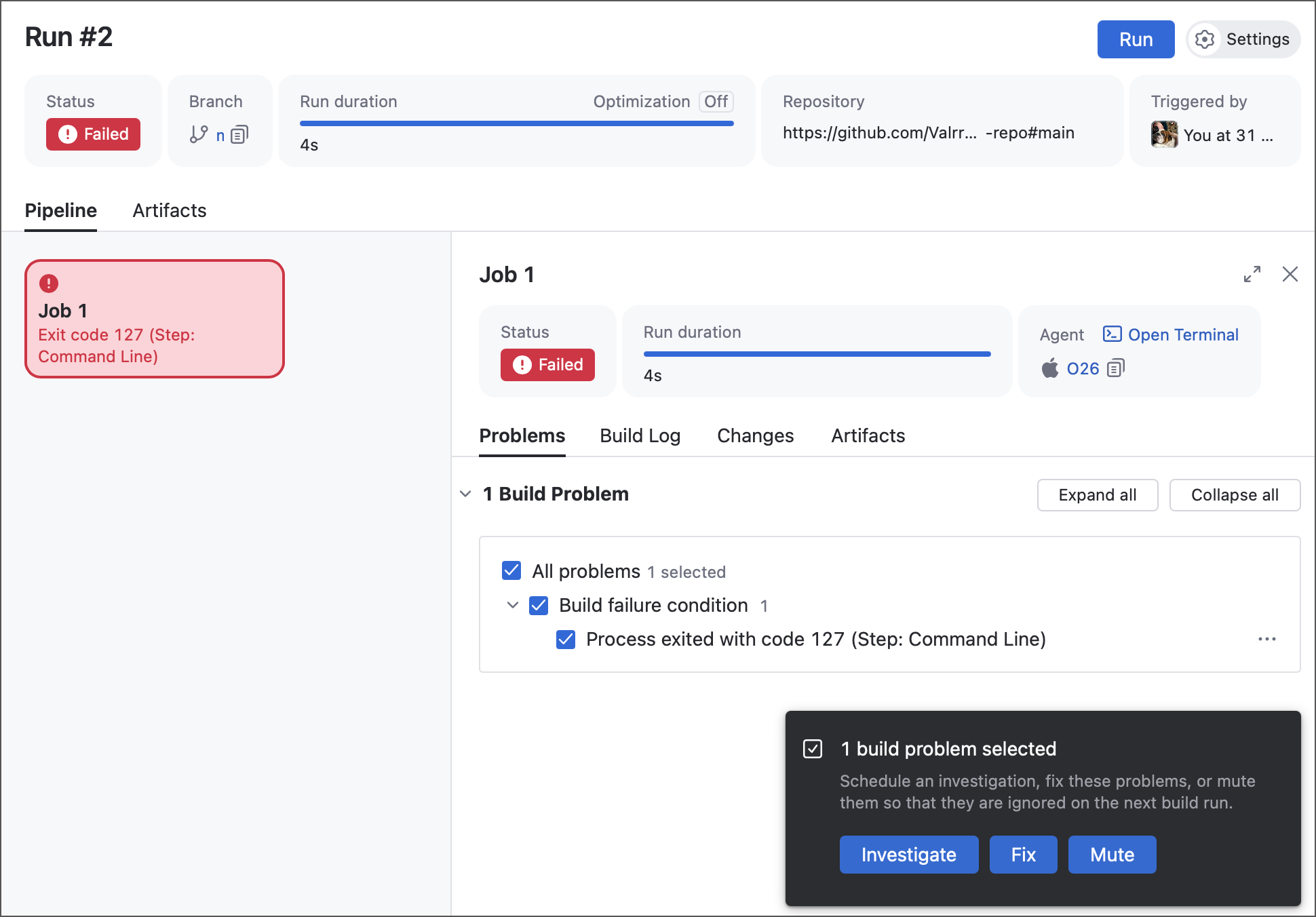
Starting with version 2025.11, pipelines support some of advanced features that was previously available only in build configurations. Users can now process build and test failures: assign investigations, mute irrelevant failures, and manually label as fixed issues that are expected to be resolved in future builds.
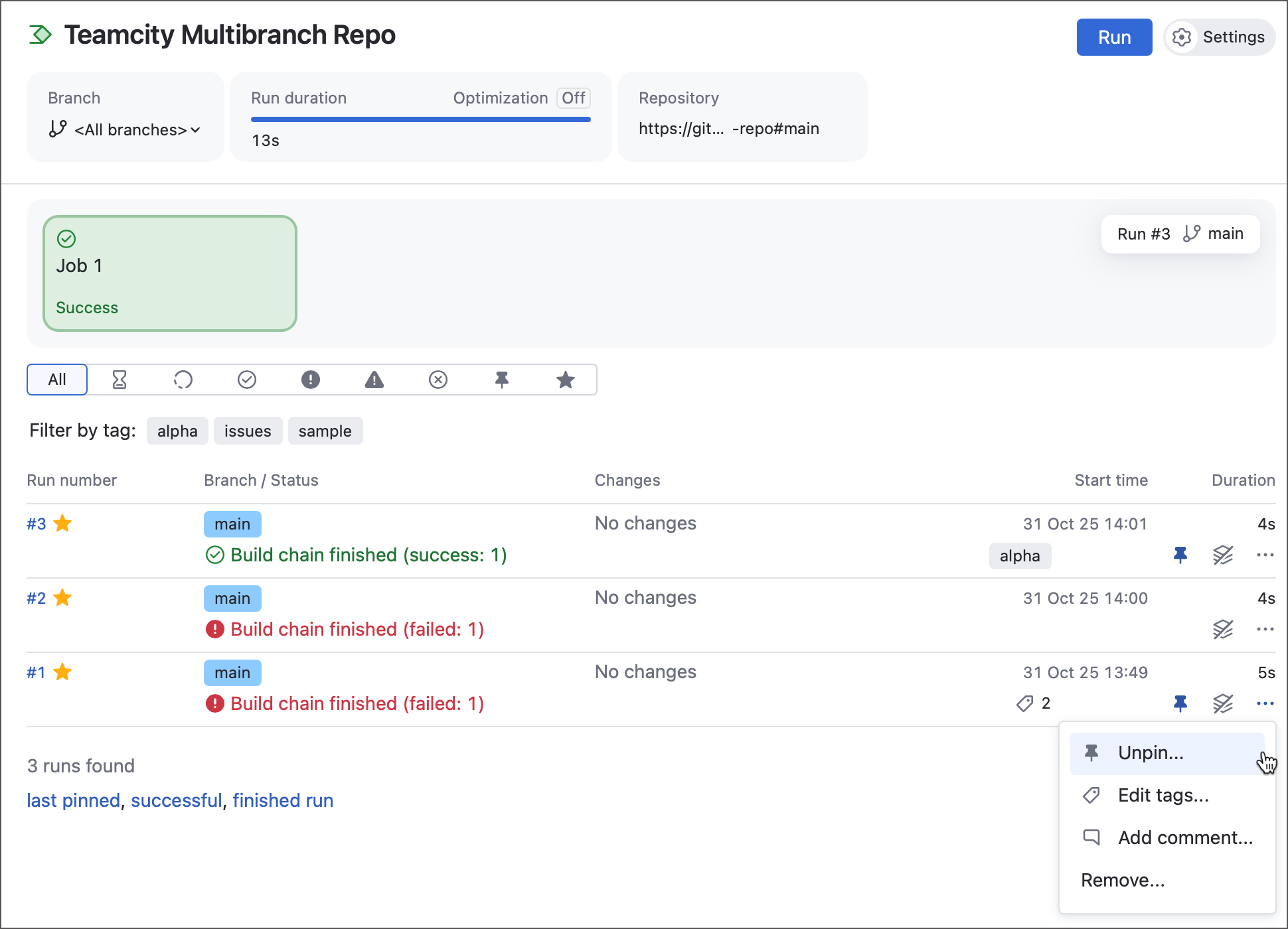
In addition, the run actions menu now includes options to pin, tag, and comment individual pipeline runs.
Learn more: Working with Build and Test Failures, Main Actions on Builds
Parameter import
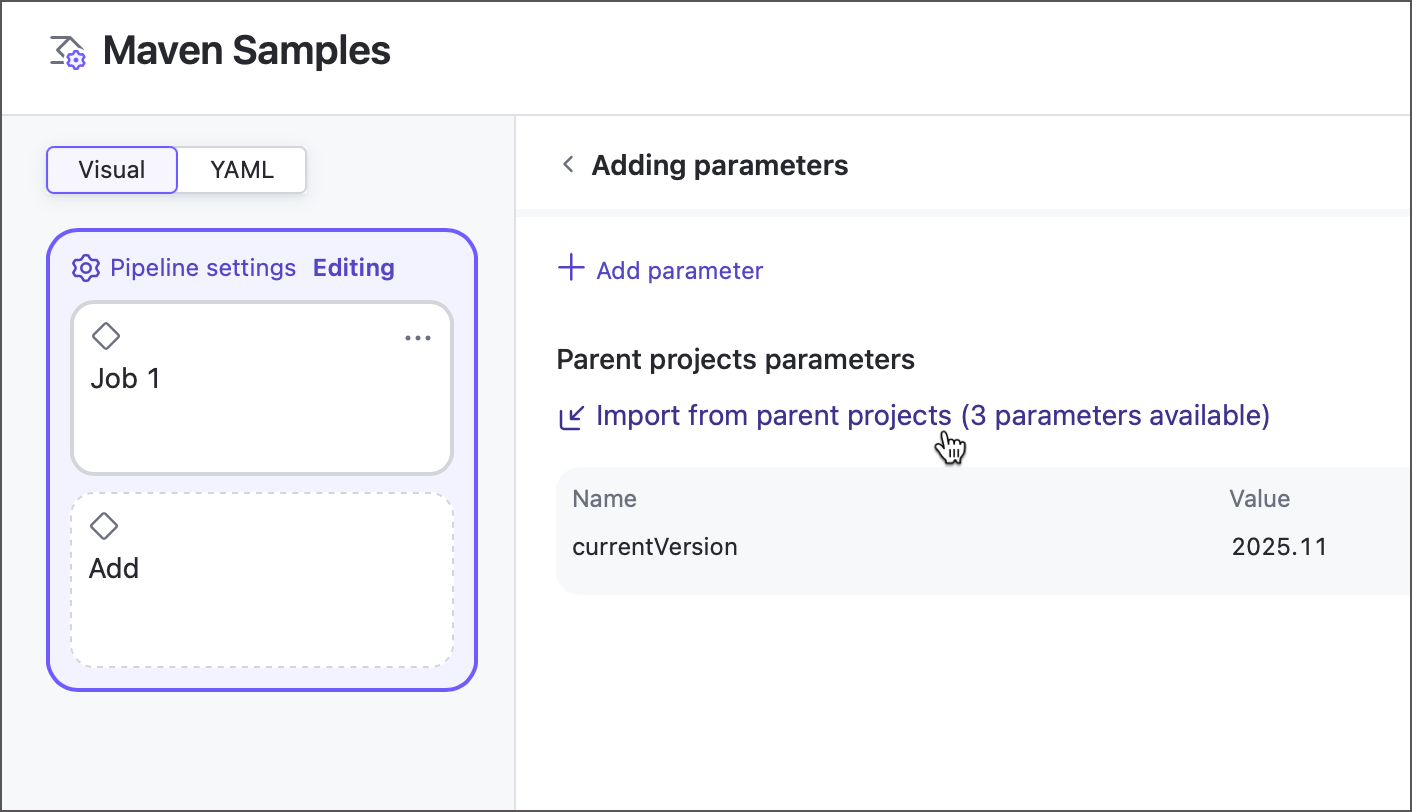
Previously, a parameter owned by a project could not be used inside pipelines. Referencing such parameters would result in an implicit agent requirement: only agents that provide a value for this parameter were eligible to run this pipeline.
Starting with version 2025.11, you can import any parameter from a direct or indirect project and use it as any other native pipeline parameter.
Learn more: Pipeline parameters, Configuring Build Parameters