A Complete Guide to AI Agents
Source: Preliminary findings from the JetBrains Developer Ecosystem Survey 2026 • 15,000+ developers worldwide
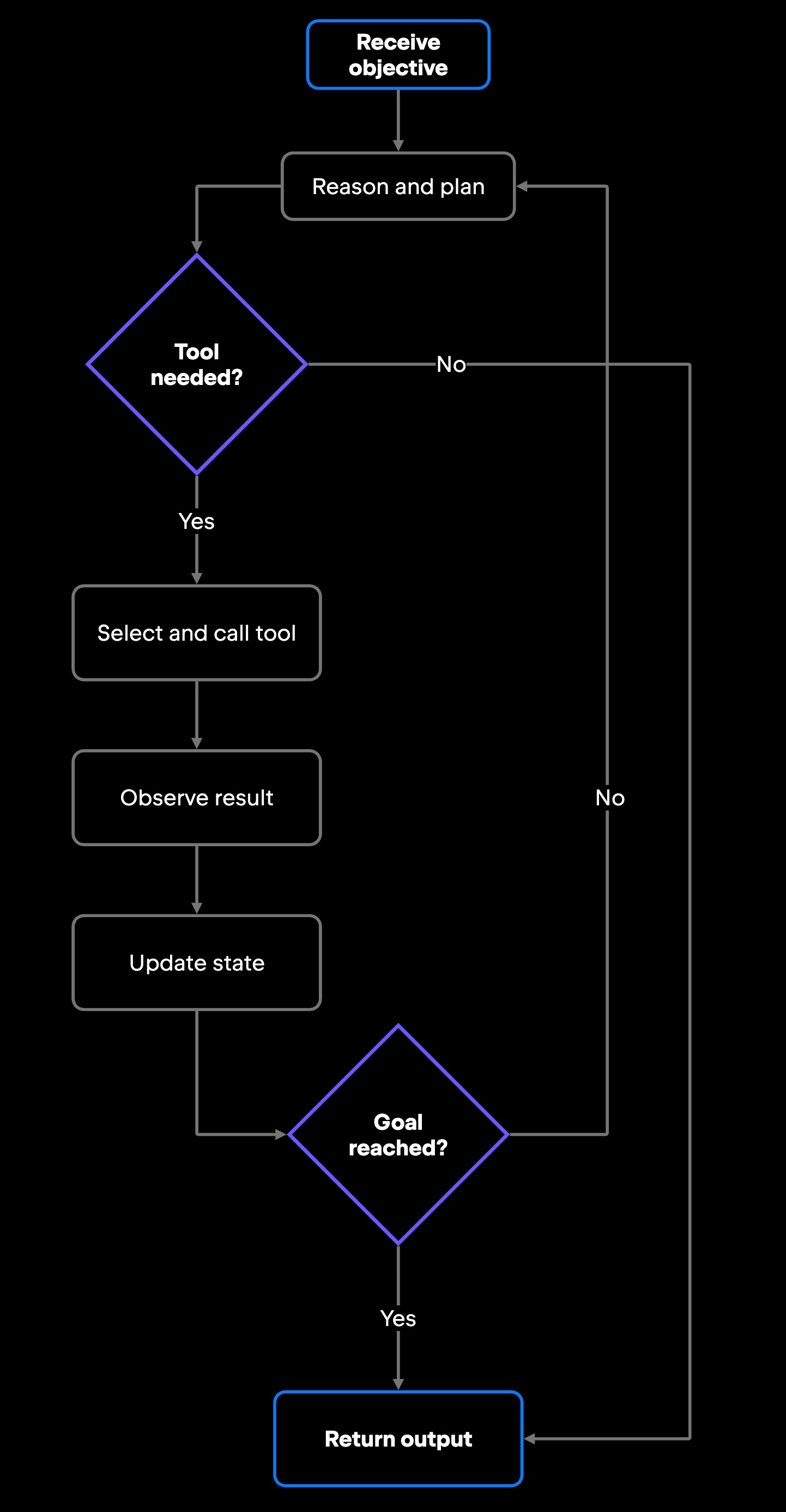
Layer
What it handles
Model
Reasoning, planning, response generation
Instructions
Tools
Memory
Orchestration
Guardrails
System prompt, persona, scope constraints
Actions the agent can take in external systems
In-context and persistent storage, retrieval
Workflow logic, multi-agent coordination
Safety checks, output validation, permission enforcement
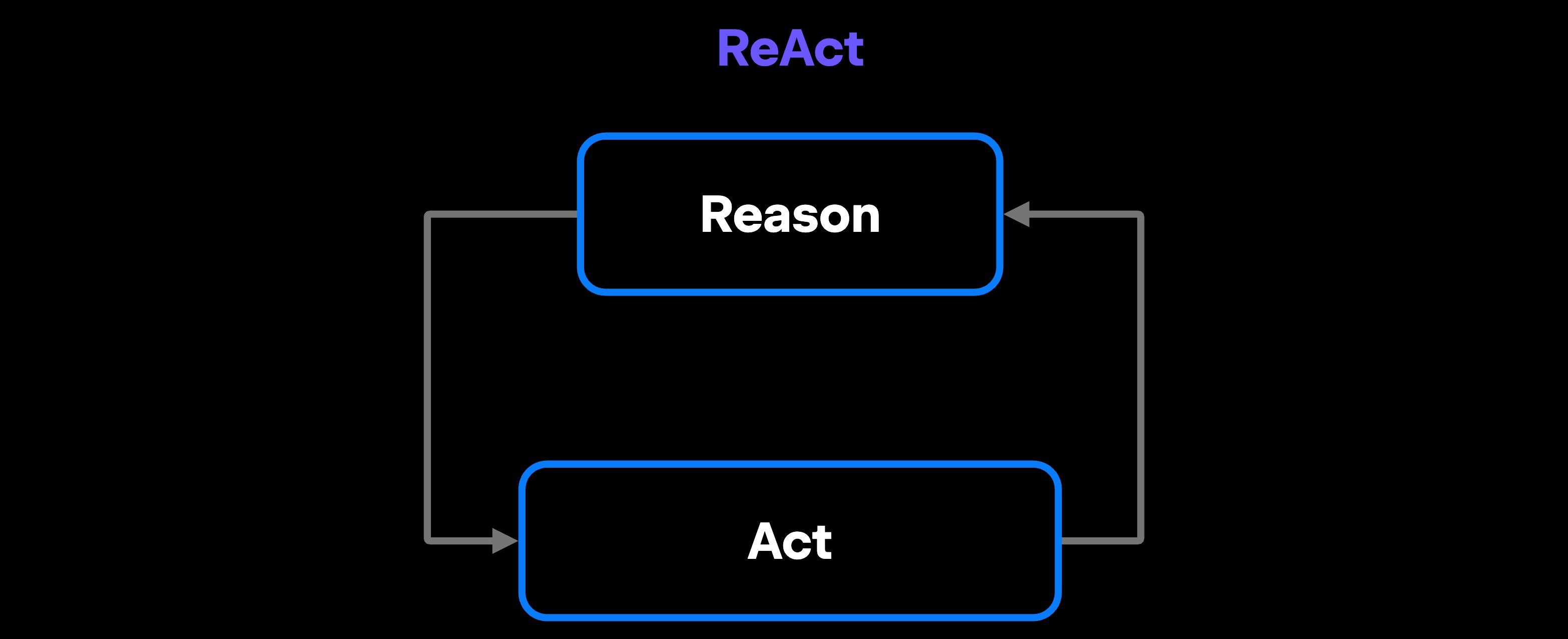

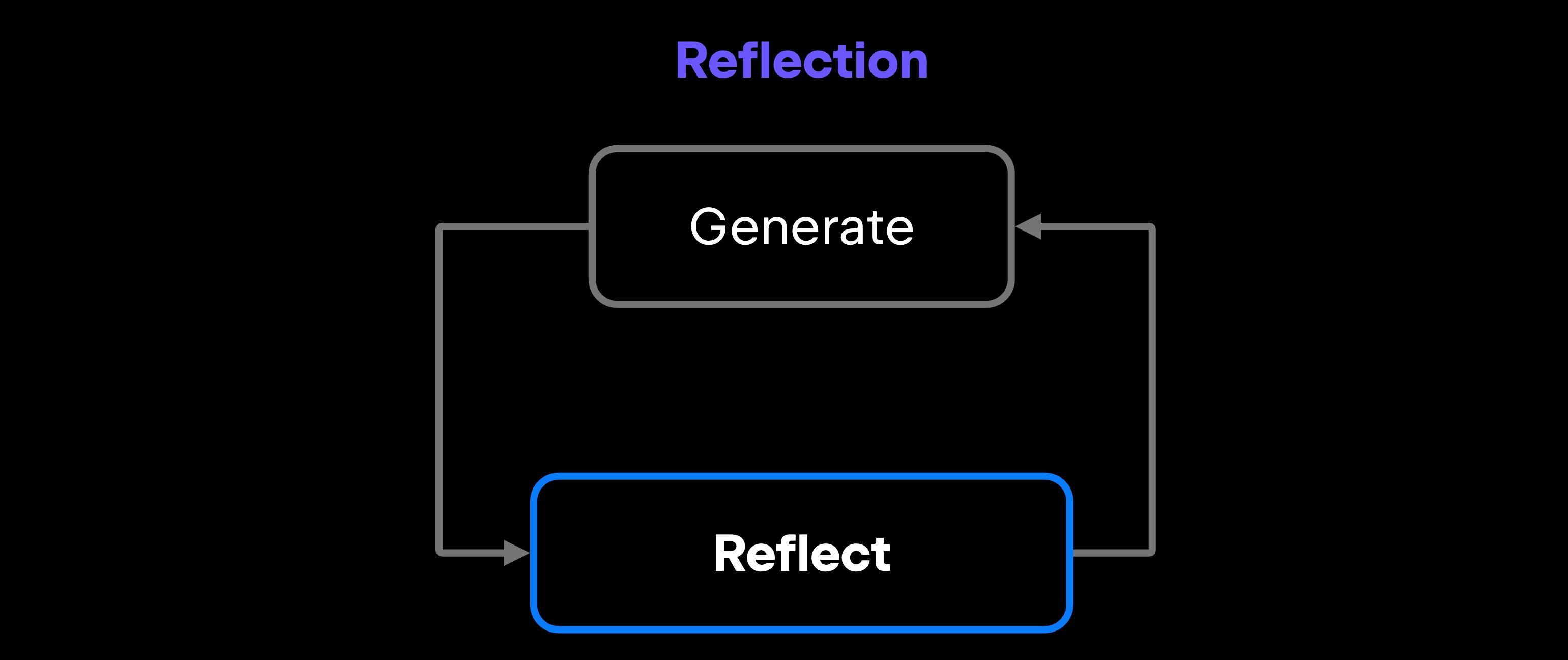
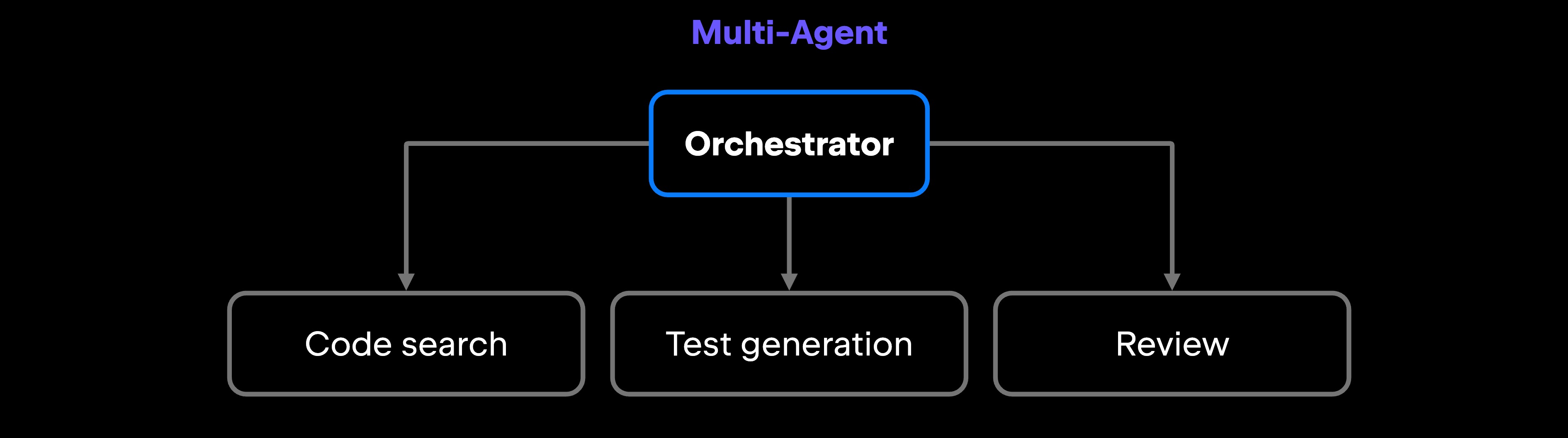
FAQ
When should developers use AI agents instead of AI assistants?
Use an AI agent when the task requires multiple steps, tool calls, or decisions that depend on intermediate results. An AI assistant is well-suited to single-shot tasks: explaining a function, suggesting a refactor, or generating a test. An agent suits multistep workflows with branches, such as "trace a failing build to the change that caused it, draft a fix, and open a pull request," or any case where you need the system to take action rather than merely suggest it.
Are AI agents fully autonomous?
Most production agents operate within defined constraints, require human approval for high-stakes actions, and stop and escalate when they hit uncertainty. Full autonomy is possible in narrow, well-tested workflows, but even there it means "no human in the loop for routine cases," not "no human oversight at all." In JetBrains IDEs, AI agents make this explicit by showing planned changes before applying them, allowing you to review and approve them before they take effect.
How do developers test and debug AI agent workflows?
For testing, capture golden traces of working runs, build regression tests around failure modes you have already encountered, test tool integrations in isolation before connecting them, and run the agent against synthetic inputs that cover edge cases. For debugging, start by examining tool call logs, not model outputs. Most failures trace back to a bad tool response, a malformed argument, or an unexpected return value. Then look at the model's reasoning at the step where the plan diverged. A trace, the ordered record of every prompt, tool call, and response in a run, is the artifact that makes this practical.
How does memory work in AI agents?
AI agents use two kinds of memory. In-context memory (also called short-term) lives in the model's context window and resets when the session ends. Persistent memory (long-term) requires external storage, often a vector store for semantic retrieval or a relational database for structured lookups, that the agent queries during the loop. For semantic retrieval, the agent typically embeds the current task, retrieves the most similar stored items, and adds them to its context. Nothing is written back to the model's weights; all persistence is external and has to be architected deliberately.
What tools can AI agents use in software development workflows?
Code execution environments, shell access, file system operations, Git and GitHub APIs, IDE context through integrations, test runners, linters, documentation search, database queries, REST API calls, ticketing systems such as Jira or Linear, messaging tools such as Slack or Teams, and CI/CD pipeline triggers are all fair game. The specific set depends on what your orchestration framework exposes and which permissions you have granted.
What are the biggest limitations of AI agents?
Reliability is the most significant one. Agents fail silently more often than regular code, and a subtly wrong plan that produces syntactically valid output can be harder to catch than a crash. Other limitations include context window constraints that affect multistep coherence, latency from chained model calls, model hallucination in tool call arguments, and the difficulty of testing non-deterministic behavior. Cost matters too: A 20-step workflow can burn through enough tokens to make per-task economics hard to justify at scale.
What is the difference between an AI agent and agentic AI?
The two terms describe different things. Agentic AI is a behavioral quality, not a particular architecture: A system behaves agentically when it pursues a goal across multiple steps, adapts its approach, coordinates across tools, and operates with bounded autonomy. An AI agent is the system that exhibits that behavior, the model plus the instructions, tools, memory, and control loop around it. That behavior is architecturally flexible: A single agent running its loop already behaves agentically, and so does an orchestration layer coordinating several specialized agents. In short, "agentic" describes how a system acts, while "AI agent" names the thing doing the acting.
Damaso Sanoja is an engineer who is passionate about helping others make data-driven decisions to achieve their goals. This has motivated him to write numerous articles on the most popular relational databases, customer relationship management systems, enterprise resource planning systems, master data management tools, and, more recently, data warehouse systems used for machine learning and AI projects. You can blame this fixation on data management on his first computer being a Commodore 64 without a floppy disk.
Use AI agents in your development workflow
Explore JetBrains AI solutions that help you build, use, and scale AI agents across the software development lifecycle.
Air Gateway
Run terminal agents through one JetBrains account, with access, models, and usage governed centrally.
Junie
Plan, code, debug, and automate tasks with a coding agent that works across your terminal, IDE, GitHub, and GitLab.
Air in IDEs
Orchestrate AI agents and verify their output directly in JetBrains IDEs, with full control over how changes are reviewed.
Air Teams
Automate software delivery workflows, coordinate agentic work across teams, identify bottlenecks affecting delivery.
Air Governance
Govern AI usage, models, policies, and costs across your organization, including JetBrains and third-party tools.
Air Context
Give agents shared organizational memory and context that carries across tools, workflows, and execution environments.
JetBrains Air
An open system of AI products for developers, teams, and organizations – from coding with agents to automating workflows and governing AI at scale.

Continue Exploring the AI Agents for Developers Guide
Learn what agentic AI is, how it works, its core components, real-world use cases, benefits, challenges, and how it differs from other AI systems.
Understand the difference between agentic AI and AI agents, including their roles, capabilities, relationship, and practical applications.
Learn how AI agent orchestration works, from planning and task routing to state management, multi-agent coordination, and reliable workflow execution.